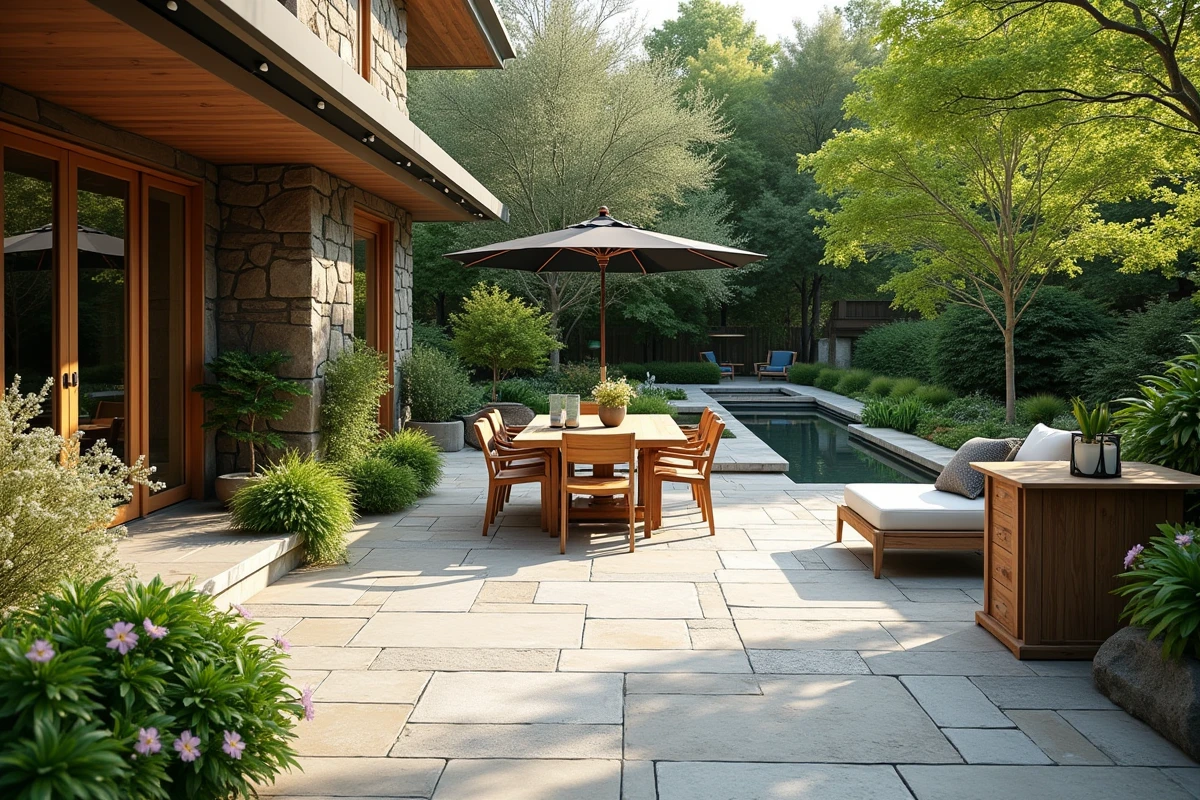
The design of an outdoor space relies on a series of technical decisions: choice of materials, water management, orientation of shaded areas. Each decision influences the next. Here are ten practical tips to transform a garden, terrace, or balcony into a functional and pleasant living space.
1. Favor permeable ground coverings
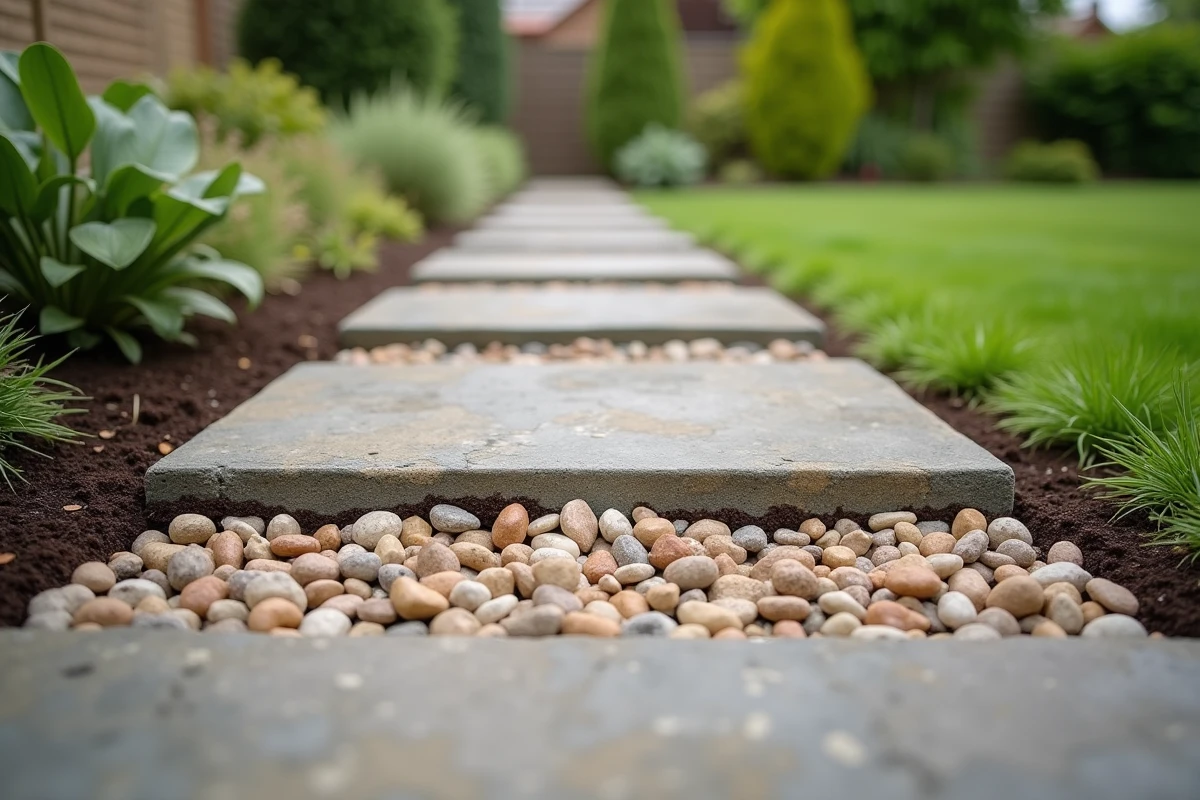
Since the Climate and Resilience law, many local urban plans require limiting impermeable surfaces and managing rainwater infiltration on the property. Draining gravels, porous pavers, or grassed cellular slabs replace smooth concrete terraces.
These permeable coverings serve a dual purpose: they comply with regulatory requirements while minimizing puddles and the heat island effect. The choice of material depends on the intended use: a regularly used pedestrian path handles sand-jointed pavers well, while a relaxation area accommodates stabilized gravels.
Be sure to check the requirements of your local urban plan before pouring any slabs. Some municipalities require a minimum percentage of permeable surface on the property.
2. Install a landscaped swale as a decorative element
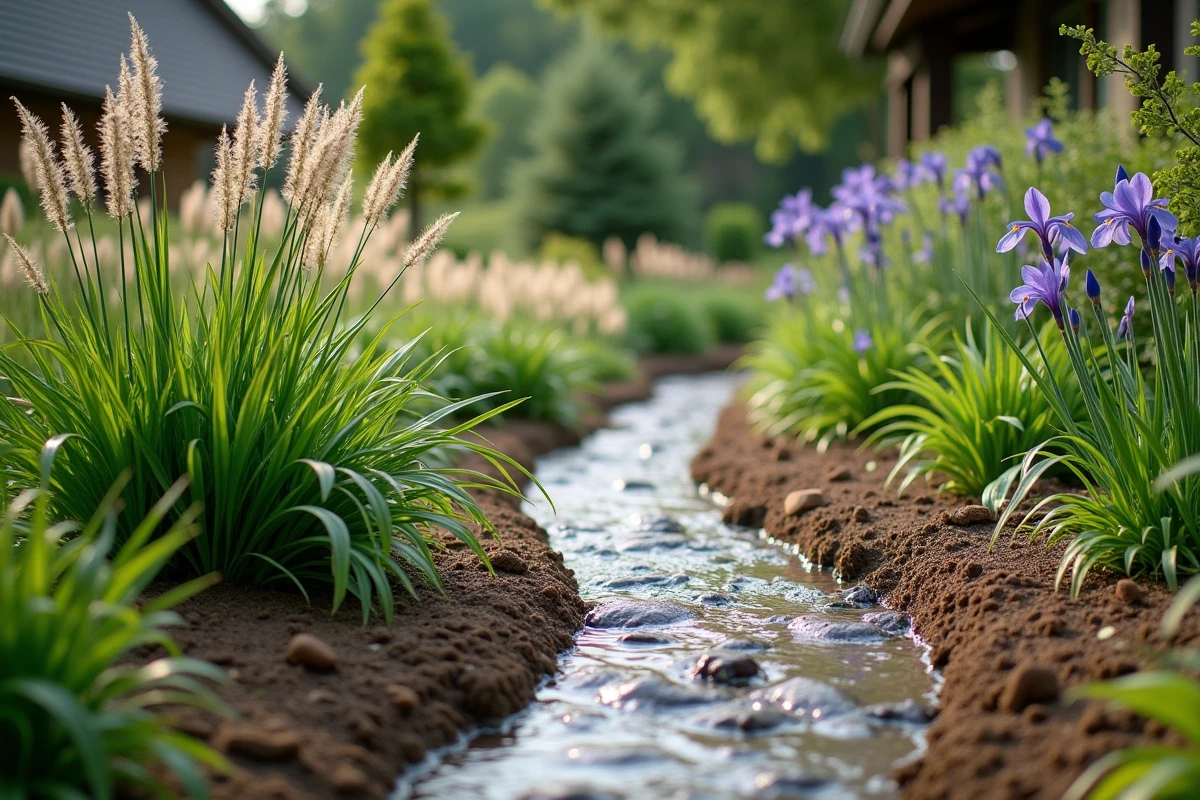
A swale is not just a technical ditch. When well-designed, it becomes a linear bed that guides the eye and structures the garden. The principle: a slight depression planted with moisture-loving perennials (marsh irises, sedges, willowherbs) that collects and infiltrates runoff water.
The Cerema guide on water management in public spaces details these devices, and the principle can be applied to a private garden. Successfully designing an outdoor space with Ambiance Jardin involves this type of solution that manages roof water while creating a visual appeal that traditional flowerbeds do not offer.
3. Plant a deciduous tree on the south or west side for summer shade
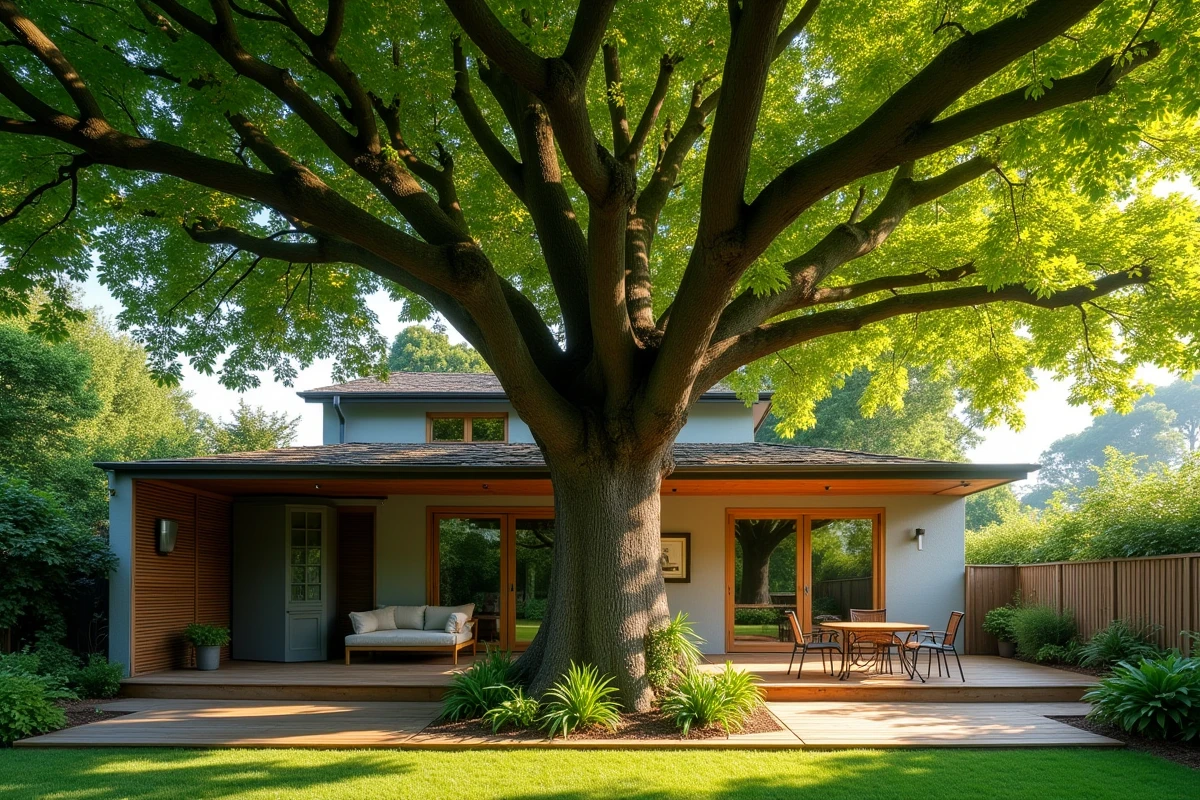
UNEP notes a rise in requests for thermal comfort-oriented landscaping among homeowners since the heatwaves of 2022. A well-positioned deciduous tree (on the south or west side) filters sunlight in summer and allows light to pass through in winter, once the leaves have fallen.
This is a more sustainable solution than a closed pergola: it generates coolness through evapotranspiration, supports biodiversity, and requires no mechanical maintenance. For a quick result, opt for medium-growing species like the plane tree or the soap tree.
4. Create functional micro-zones with different materials
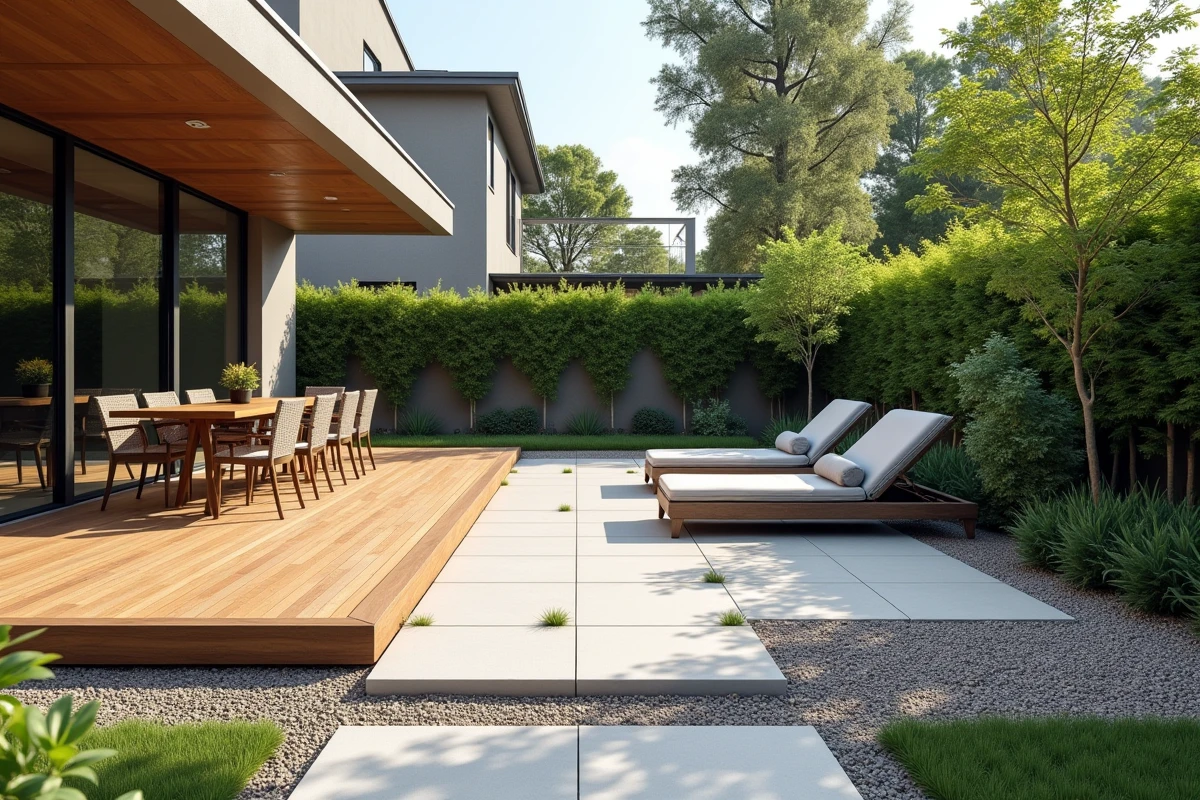
Defining areas (dining, relaxation, play, vegetable garden) does not necessarily require walls or hedges. A simple change in ground covering – composite wood for the dining area, grass for the play area, light gravel for the path – is enough to distinguish each use without partitioning.
This approach works particularly well on small surfaces where physical separations take up space. It also allows for adapting the material to local constraints: wood under a dripping tree, mineral in high-traffic areas.
5. Choose layered lighting to extend evenings
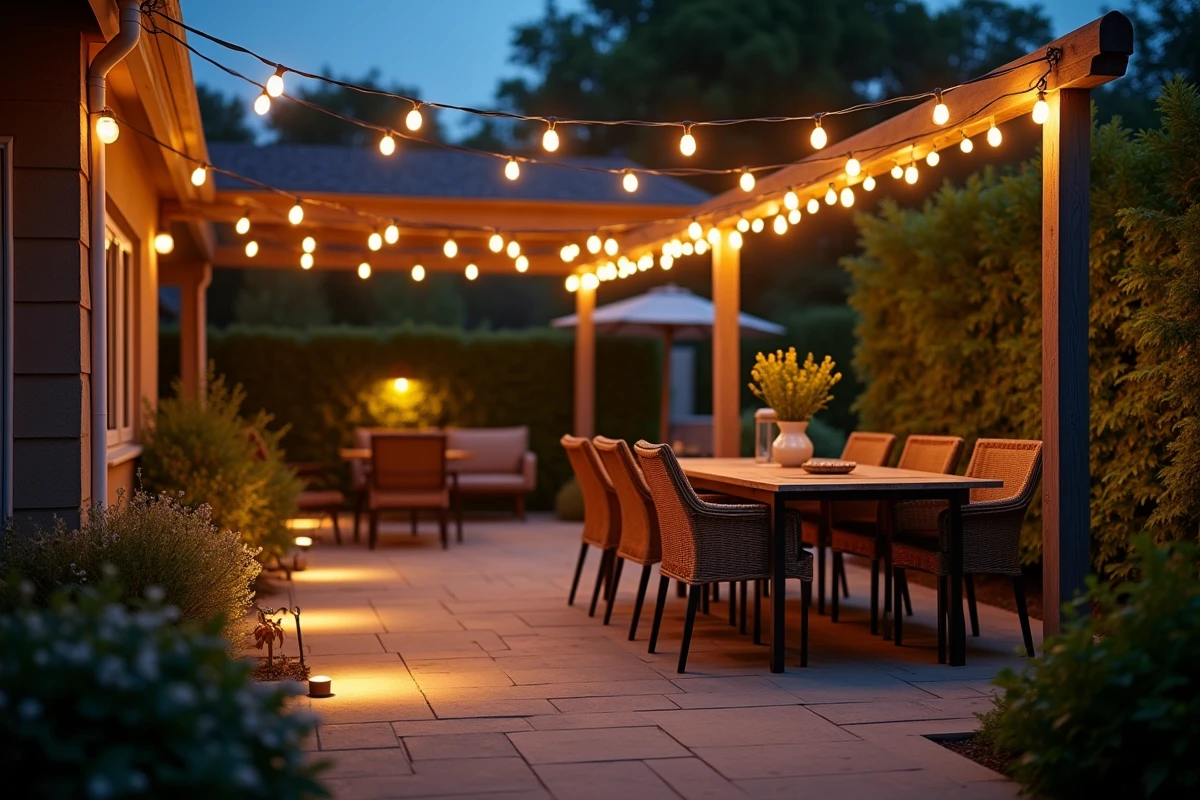
A single powerful spotlight flattens the relief and attracts insects. Layered outdoor lighting combines three levels: low posts along pathways, spotlights directed at remarkable plants, and a string light or pendant above the table.
The entire setup consumes little energy thanks to low-voltage LEDs and creates an ambiance that can be used without dazzling the neighbors. Opt for a warm color temperature (around 2,700 K) to maintain a natural look that harmonizes with the plants.
6. Integrate a sunbreak hedge instead of a synthetic privacy screen
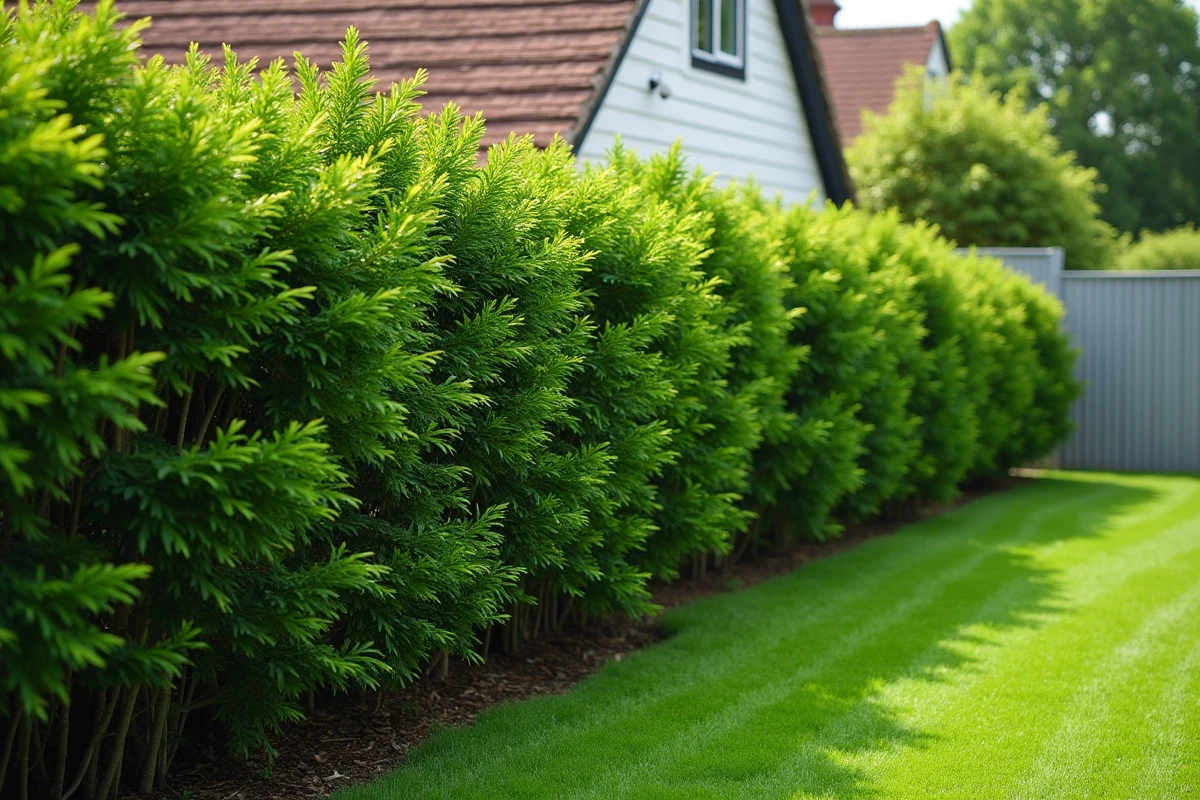
Reed screens and PVC privacy panels age poorly and provide no thermal comfort. A mixed hedge made up of evergreen and deciduous shrubs (photinia, eleagnus, dogwood) filters the wind, reduces perceived heat, and provides habitat for beneficial garden insects.
The growing interest in plant solutions rather than fully enclosed pergolas is confirmed by trends noted by UNEP. The hedge requires patience (two to three seasons for a dense result), but its maintenance cost remains limited to one or two annual trims.
7. Choose furniture proportionate to the available space
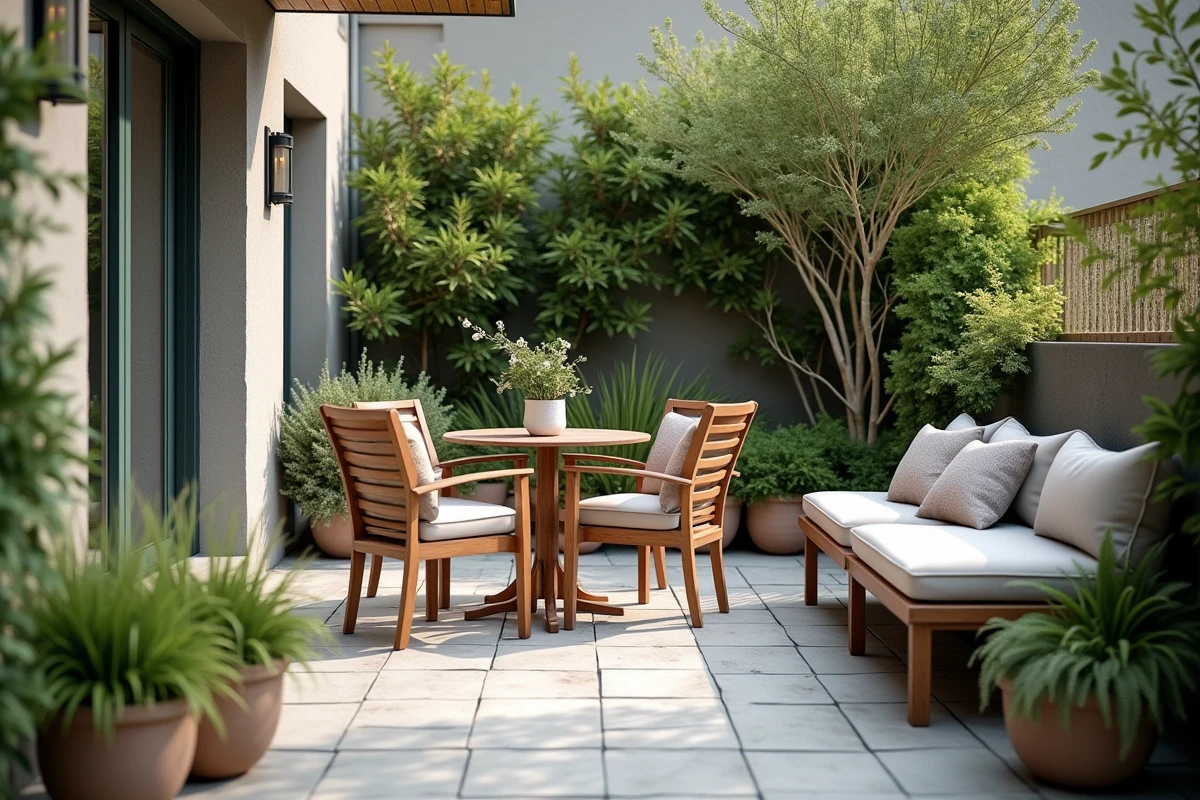
A large table on a narrow terrace blocks circulation and makes the space unusable on a daily basis. Measure the welcoming area, add at least sixty centimeters of clearance behind each seat, and choose the furniture based on this actual perimeter.
On smaller surfaces, built-in benches with storage compartments free up floor space while providing additional seating. Folding or stackable furniture remains the most flexible solution for balconies and small terraces.
8. Limit the plant palette to three or four color families
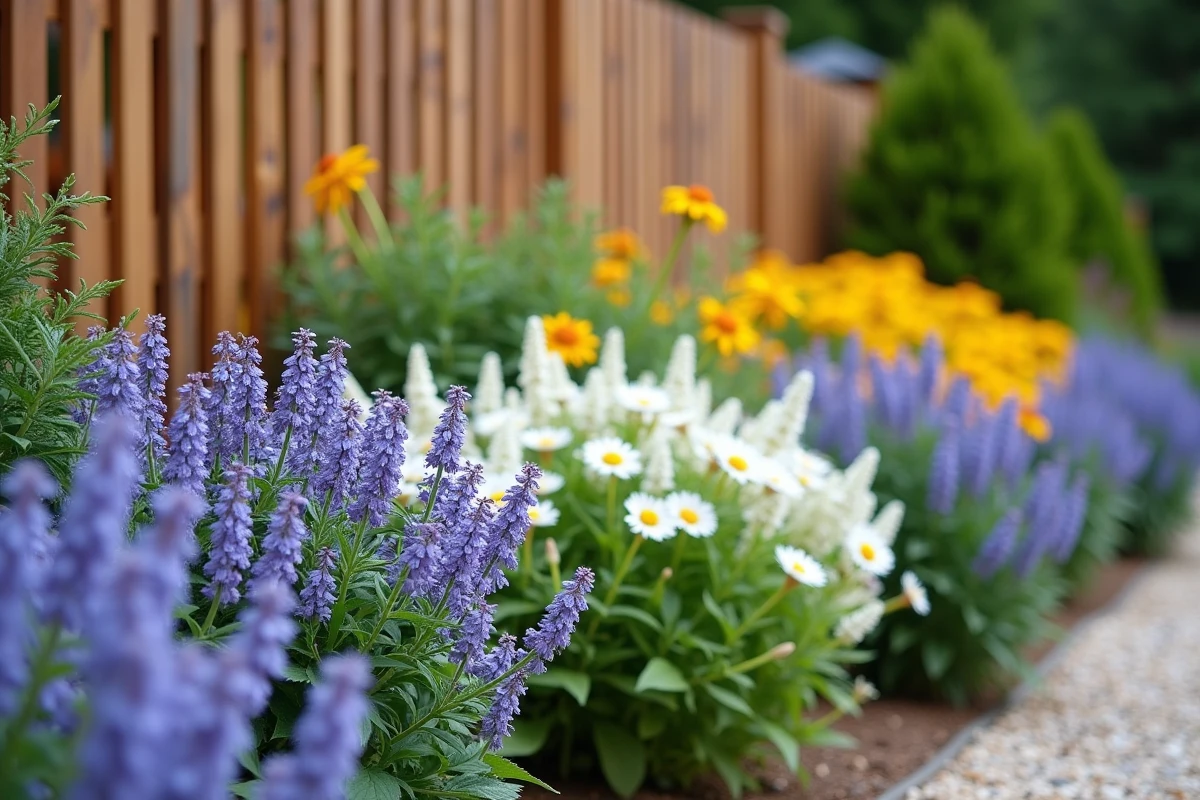
Multiplying blooms creates a patchwork effect that strains the eye. Three color families, including one structuring green, are enough to create a coherent scene throughout the year.
Choose plants suited to your soil and exposure rather than spectacular but fragile varieties. A simple bed that thrives without intervention yields better long-term results than a complex composition that deteriorates at the first dry summer.
9. Plan for an accessible water point for maintenance and enjoyment
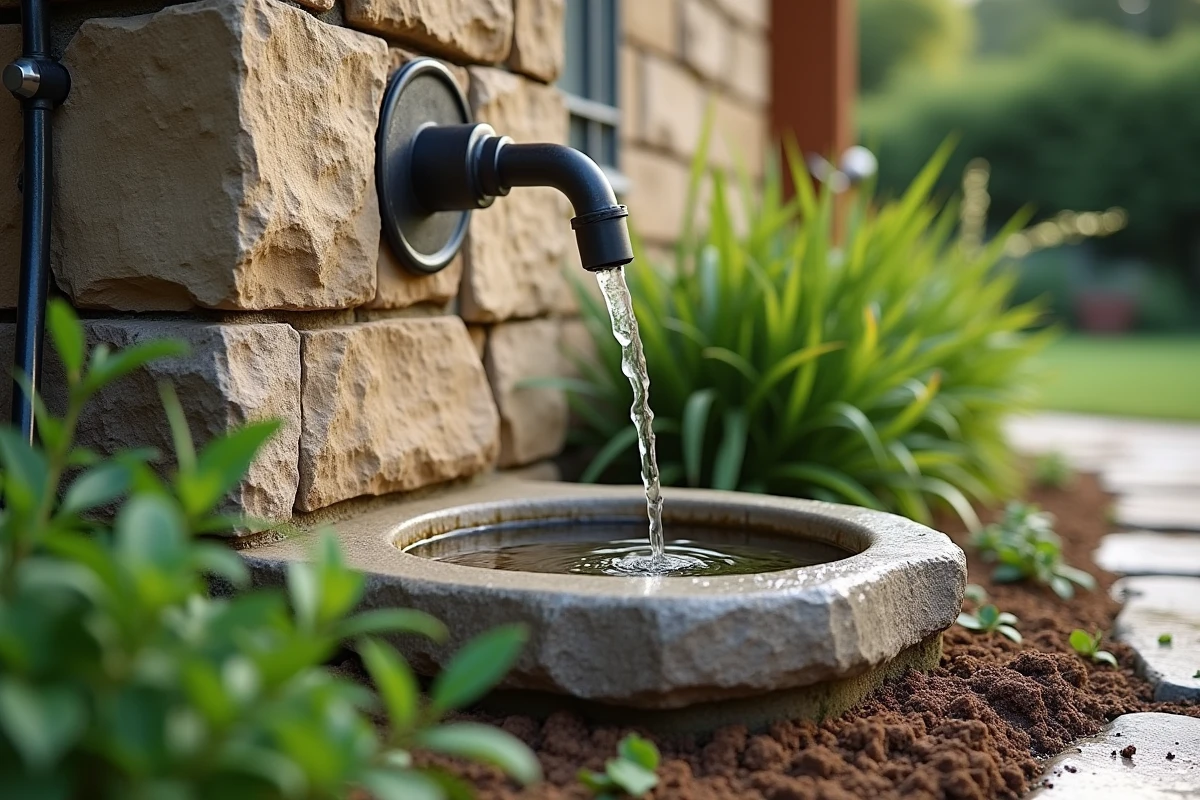
An outdoor faucet connected to the network (or to a rainwater tank) simplifies watering, cleaning furniture, and filling a potential pond. Positioning this water point at the center of the garden reduces the length of hose needed and avoids dragging a watering can over ten meters.
For enjoyment, a small fountain or a low-volume above-ground pond adds the sound of water that masks urban noises. Maintenance remains minimal if circulation is ensured by a solar pump.
10. Anticipate maintenance from the project’s design
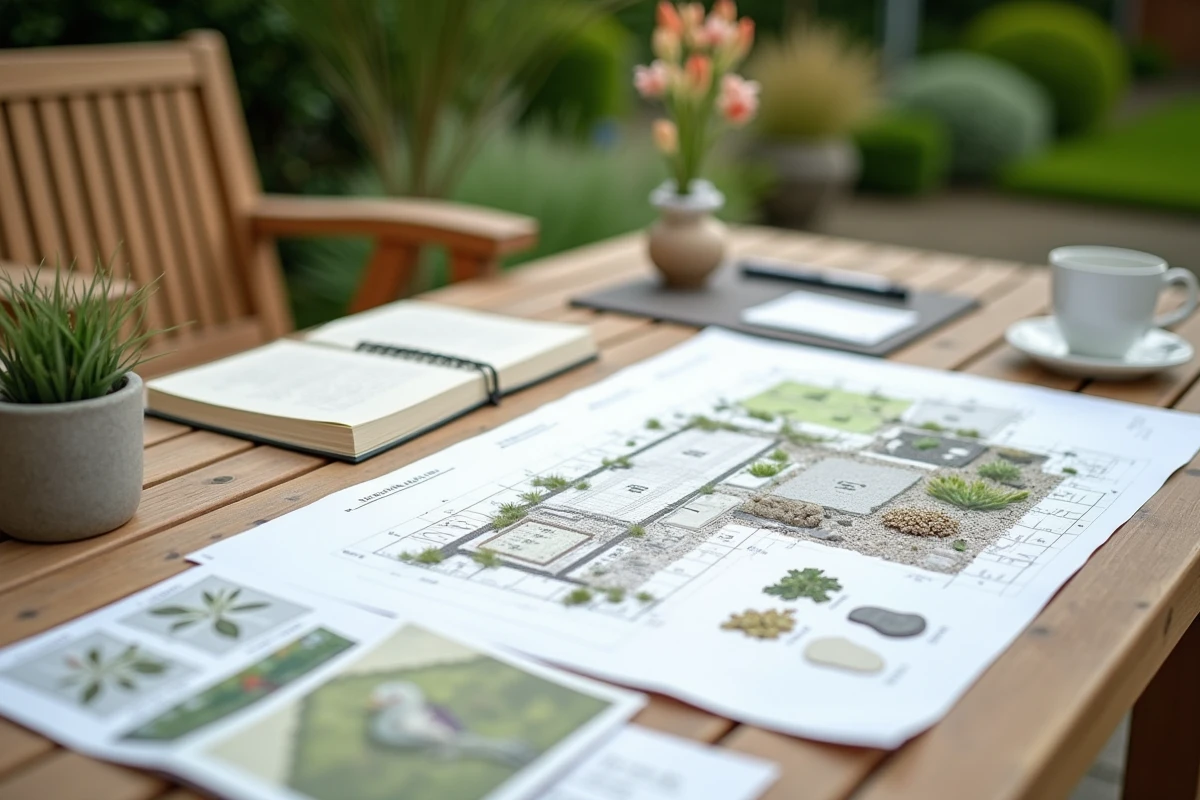
A harmonious outdoor design that requires five hours of mowing and trimming each week ends up abandoned. From the initial plan, assign each area a realistic maintenance level: grass limited to areas actually used, mineral or organic mulching on beds, slow-growing shrubs at the edges.
- Replacing part of the grass with dwarf clover reduces mowing frequency and is more drought-resistant.
- A mulch of at least five centimeters limits weed growth and retains soil moisture.
- Corten steel or aluminum borders prevent grass from invading beds without additional maintenance.
An outdoor space designed to last relies as much on the realism of the maintenance plan as on the choice of materials or plants. The best terrace is the one that is still used three years after it was created.