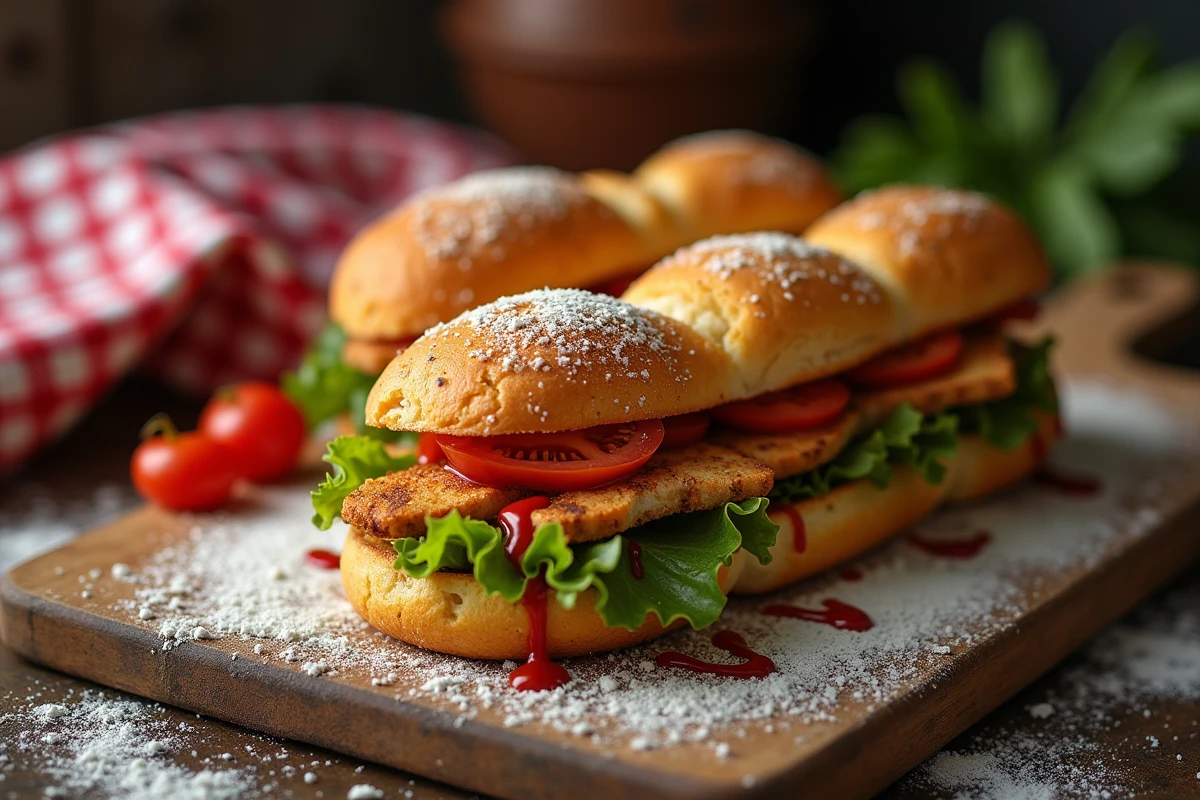
The bokit does not descend from a single recipe. Its lineage is based on a crossbreeding of frying techniques found throughout the Caribbean arc, from Trinidadian bakes to Johnny cakes from the English-speaking islands. What distinguishes the Guadeloupean version is the combination of a yeast-leavened dough and total immersion cooking in oil, whereas other islands prefer shallow frying or pan-frying.
Leavened dough and deep frying: the technique that makes the bokit
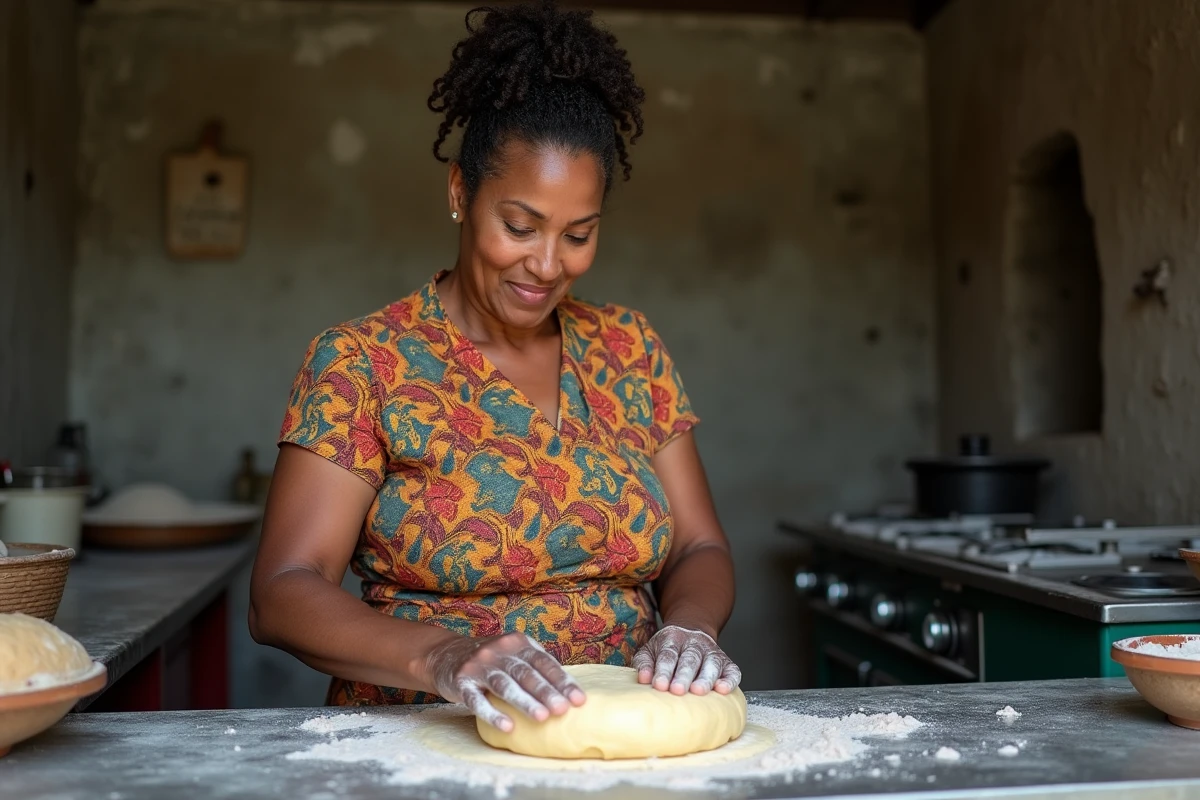
The dough for the bokit relies on a precise ratio of wheat flour, baker’s yeast, and baking powder. The combination of the two leavening agents produces an airy crumb that puffs up in two stages: first during the proofing, then abruptly when it comes into contact with hot oil. It is this double rising that creates the characteristic inner pocket, deep enough to hold the filling without softening the crust.
The temperature of the oil plays a crucial role. If it’s too low, the dough absorbs the fat and becomes heavy. If it’s too high, the crust sets before the inside cooks. Experienced artisans work by visual cues: the dough should rise to the surface within seconds and brown evenly. A properly fried bokit remains dry to the touch after draining.
We traced the origin of the bokit on Chapeau Melon to better understand how this technique has been codified over the decades in Guadeloupe.
Caribbean lineage of the bokit: bakes, johnny cakes, and creole fried bread
Reducing the bokit to an isolated invention would be a mistake. Fried bread exists in similar forms in almost all of the Caribbean. In Trinidad, the bake is split and filled with shark (fried shark). In Jamaica, the festival accompanies fish. In Puerto Rico, alcapurrias use a fried plantain dough.
The bokit stands out for its pure wheat dough and its closed sandwich format, while most Caribbean fried breads are served open or as a side. The most solid hypothesis links the word “bokit” to the English term “bucket,” referring to the containers in which the dough was fried. This popular etymology has circulated for a long time in Guadeloupe, although no academic source has definitively settled it.
The geographical proximity between Guadeloupe and Dominica, an English-speaking island, strengthens the linguistic connection. Exchanges between vendors from both islands during the 20th century likely facilitated the transfer of the technique and the term.
Traditional fillings and the grammar of the bokit in Guadeloupe
The bokit is not a neutral base. Each filling follows a logic of textures and seasoning calibrated to withstand the residual heat of the fried bread.
- Cod (chiquetaille or shredded acras) provides salt and a fibrous structure that does not soak the dough, seasoned with vegetarian pepper and lime
- Smoked chicken, smoked with campêche or guava wood, adds a fatty and smoky note that balances with raw vegetables (lettuce, tomato, cucumber)
- Ham and cheese, a more recent version, has established itself as the entry-level bokit, quick to assemble and popular among schoolchildren
The sauce chien remains the most common flavor binding, made from chives, pepper, garlic, oil, and lime juice. Some artisans also offer a breadfruit sauce or a mayonnaise spiced with colombo.
The assembly follows a precise order at reputable stands: sauce at the bottom, protein filling, vegetables on top, then a second layer of sauce before closing. This order prevents the bread from softening from below.
Bokit in mainland France and fusion versions: what really changes
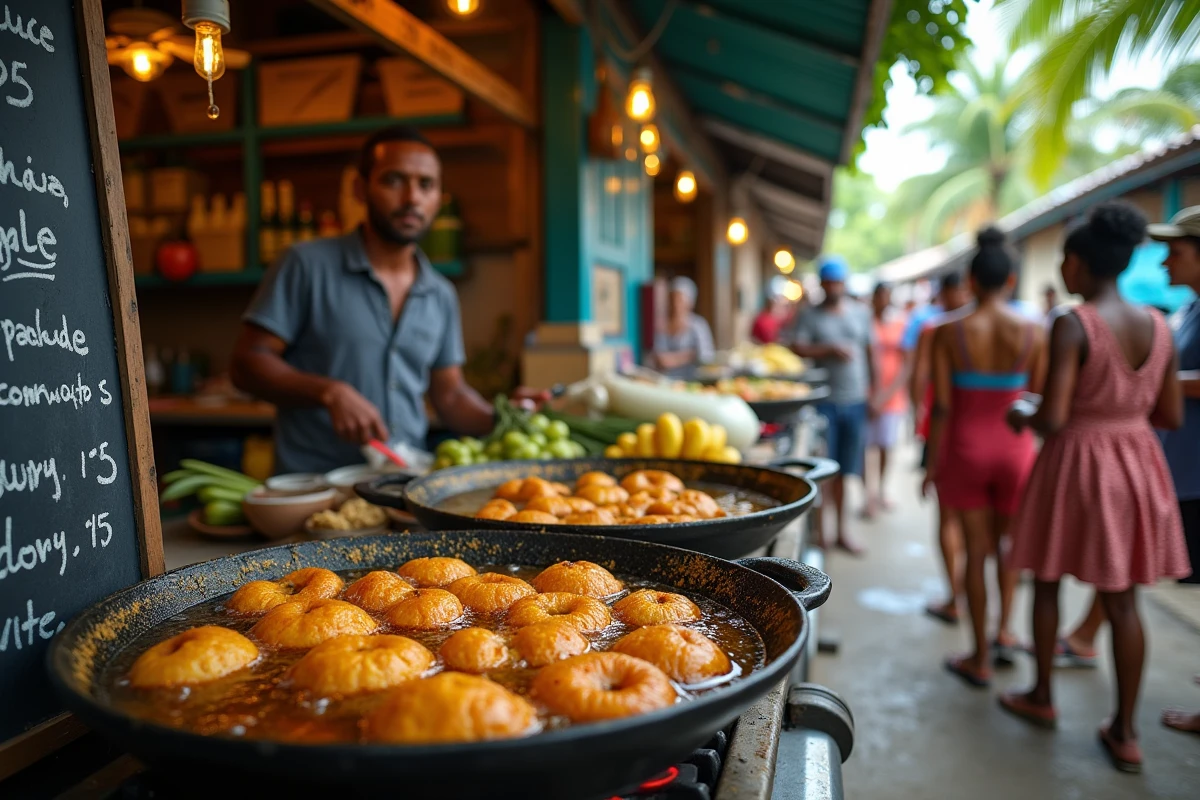
The Antillean diaspora in mainland France exported the bokit as early as the migration years to Paris and major cities. Since the post-Covid reopening, several establishments run by Antillean entrepreneurs have been offering fusion bokits tailored to a young, urban clientele. There are now fillings with marinated tofu, roasted vegetables, or pulled jackfruit, inspired by gourmet burgers or kebabs.
This evolution raises a real technical question. The dough of the traditional bokit is designed for savory, fatty, and low-moisture fillings. Vegetarian versions, often more watery (roasted zucchini, hummus), weaken the crust if the serving time exceeds a few minutes. Establishments that hold up have adapted their recipe with a slightly longer frying time to strengthen the outer shell.
Cultural heritage recognition of the bokit: where is the process now
The bokit now transcends the realm of street food. The Regional Scheme for the Development of Tourism and Leisure in Guadeloupe 2022-2027, adopted by the Guadeloupe Region, cites it among the identity markers to be promoted in the archipelago’s tourism strategy.
At the same time, the rectorate of the Guadeloupe academy has integrated the bokit as an educational tool during the Taste Week in 2023 and 2024, describing it as a tool for education about taste and heritage rather than just a consumer product. This type of initiative anchors the bokit in a structured cultural transmission logic, beyond culinary nostalgia.
The question of intangible cultural heritage labeling remains open. Unlike the traditional French baguette, the bokit does not yet have a formalized specification. Discussions focus on the difficulty of establishing a recipe when each family, each stand, claims its own version as the authentic one.
The bokit remains a living culinary object, modified with each generation without losing its basic architecture: a leavened dough, a crisp frying, a filling that tells where one comes from.