
A doctor receiving a patient’s vital signs in real-time from their home, a nurse adjusting a care protocol remotely, a pharmacist monitoring adherence to a chronic treatment via a dedicated application: connected health is redefining everyday professional practices. These practices rely on digital tools whose technical and regulatory framework is evolving rapidly, sometimes faster than habits.
Interoperability of health data: what the European EHDS regulation changes
The regulation on the European Health Data Space (EHDS) was formally adopted by the Council of the European Union in spring 2025. This text gradually imposes standardized interoperability via the HL7 FHIR format on connected health stakeholders and strengthens patients’ rights to access their own data.
Specifically, a patient tracking software used by a physiotherapy practice must be able to communicate with the hospital platform, the pharmaceutical record, and the patient’s telemonitoring application. Before the EHDS, each publisher could choose their own format. That era is coming to an end.
For healthcare professionals, this means an additional selection criterion when choosing a digital tool: check HL7 FHIR compatibility before any purchase. A non-compliant software today will become an operational barrier tomorrow. Organizations that anticipate this transition, relying on Geek Medical’s professional solutions, save time on compliance.

Connected home hospitalization: beyond simple teleconsultation
Have you noticed that the term “telemedicine” covers very different realities? A video consultation with a general practitioner is telemedicine. But managing a home hospitalization unit with connected sensors that continuously transmit saturation, heart rate, and blood pressure is a whole different level of complexity.
The 2025 report from the World Health Organization on digital health documents the rapid rise of “virtual wards” (connected home hospitalization units) in several European countries, particularly in the United Kingdom and Nordic countries, with structured national programs.
What this implies for caregivers
The healthcare professional no longer simply reads a report. They receive a real-time data stream and must know when to intervene. This entails three things:
- Digital filtering and alert tools capable of sorting relevant data from hundreds of daily measurements to avoid information overload
- Specific training in interpreting continuous data, different from reading a one-time blood test or a standard blood pressure reading
- A clear organizational framework that defines who monitors what, when, and according to which escalation protocol in case of detected anomalies
Without these three pillars, technology generates more stress than it resolves. Connected equipment is only valuable if the surrounding human workflow is designed in advance.
Data protection and connected medical devices: the new approach from CNIL
In 2024, CNIL updated and then supplemented in 2025 its “Health Data” reference framework and its guidelines on connected medical devices. The change in doctrine is notable: evaluation is now done algorithm by algorithm, rather than solution by solution.
Let’s take an example. A connected blood pressure monitor uses one algorithm to measure blood pressure, another to detect arrhythmia, and a third to predict the risk of cardiovascular events. Each of these algorithms must undergo a separate privacy impact assessment.
Why this change affects the choice of solutions
For a facility manager or a private practitioner, the natural reflex is to compare the overall functionalities of a device. The new approach from CNIL requires looking under the hood. Two devices with identical functionalities may present very different levels of compliance depending on the granularity of their algorithms.
The selection criterion becomes: does the publisher document each algorithm separately? If the answer is vague, it’s a warning signal. Professionals should demand this transparency from the commercial demonstration phase, before any commitment.
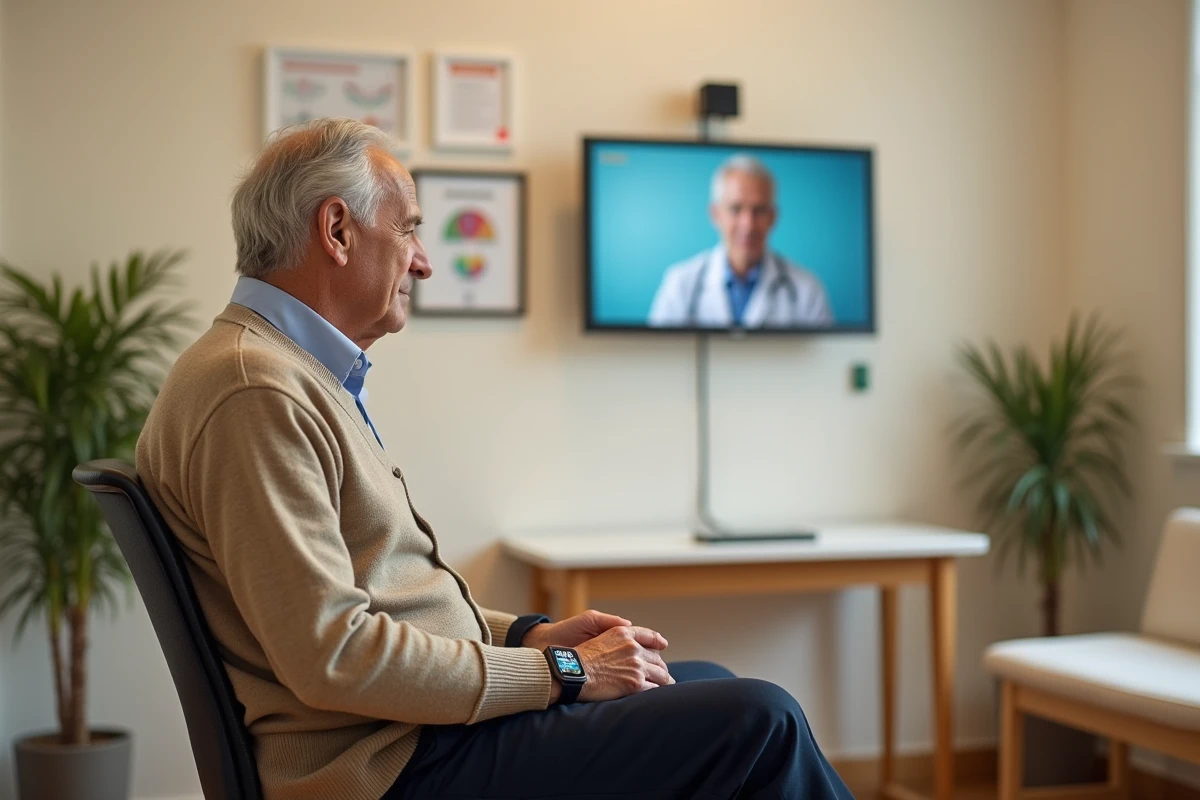
Concrete criteria for choosing a connected health tool in private practice or in a facility
The market for digital health solutions is dense. Rather than listing product categories, here are the questions to systematically ask a publisher before signing:
- Is the software HL7 FHIR compatible, and is this compatibility certified or just announced in a roadmap?
- Are privacy impact assessments available algorithm by algorithm, in accordance with CNIL’s latest guidelines?
- Does the device integrate with the Shared Medical Record (DMP) and secure health messaging without a paid additional module?
- Is technical support provided by individuals trained in the professional constraints of caregivers, and not just by a general IT helpdesk?
A compliant and interoperable tool today avoids a costly migration in two years. The European regulatory timeline does not allow significant leeway for latecomers.
Connected health is no longer an experimental field reserved for large hospital groups. Private practices, multi-professional health centers, and home care structures are directly affected by ongoing regulatory developments. The choice of a digital tool now involves as much data management and compliance as clinical practicality.