
Scraping a facade coating at the right time determines the consistency of the finish and the durability of the coating. The question of whether to scrape a coating the day after its application arises on all job sites, from private individuals to professional facade workers. The answer depends less on a fixed timeframe than on a set of physical and climatic parameters that deserve careful examination.
Humidity and cold: when scraping the next day becomes counterproductive
Manufacturers’ technical data sheets place the scraping window between 12 and 48 hours after application. This timeframe assumes a temperate climate, moderate humidity, and a properly prepared substrate. Outside of these conditions, the schedule changes radically.
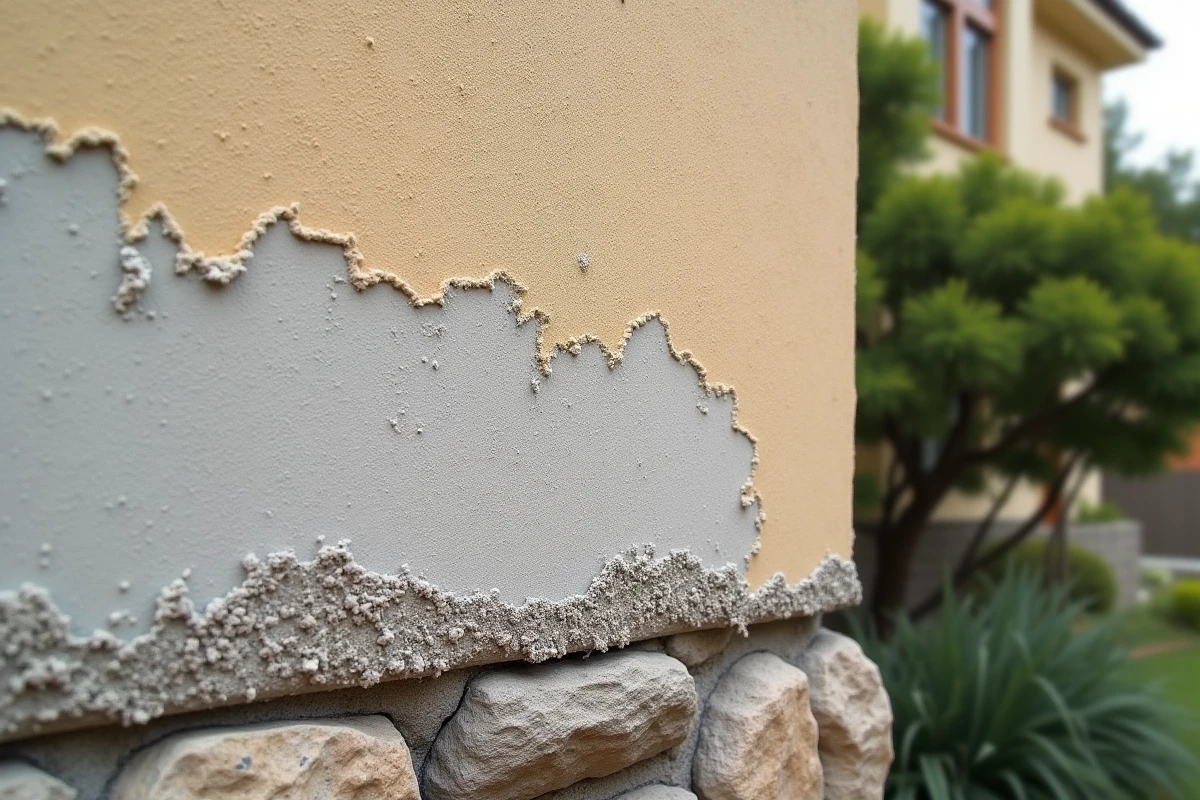
When relative humidity exceeds 70%, the water contained in the coating evaporates much more slowly. The next day, the surface layer may feel firm to the touch while the core of the material remains plastic. Scraping at this stage pulls aggregates instead of cleanly scratching them, leaving irregular depressions visible once the facade dries.
The problem worsens when the temperature drops below 10 °C. The hydraulic setting of binders (cement, lime) slows down significantly. Below 5 °C, it may almost stop. Even the addition of setting accelerators does not fully compensate for this slowdown: below 10 °C and above 70% relative humidity, scraping the next day is rarely viable.
Field reports confirm a significant increase in hairline cracks when scraping is done too early on hydraulic coatings with air binders, particularly in areas exposed to early autumn frosts. Waiting 48 to 72 hours, or even longer, remains the most reliable precaution.
Before getting started, it is useful to understand in which situations it is relevant to scrape a coating the next day and where patience is required.
Revised DTU 26.1: the regulatory framework for scraping timeframes
The DTU 26.1, revised in 2024, now more strictly regulates the intervention timeframes for facade coatings. This text imposes a minimum delay of 24 hours before scraping for mineral coatings on new substrates. Scraping earlier exposes one to non-compliance with air-tightness standards, with potential consequences in case of disputes or claims.
This 24-hour delay constitutes a minimum, not a target. On a job site in winter conditions or on a north-facing facade with little sun exposure, adhering to the DTU often requires waiting longer. The text does not set a maximum duration, leaving the professional responsible for assessing the maturity of the coating before intervention.
What the DTU does not say
The DTU 26.1 does not explicitly distinguish between single-layer coatings and multi-layer systems in its recommendations for timeframes. Field reports vary on this point: some facade workers believe that single-layer coatings based on synthetic resins reach sufficient firmness more quickly than traditional lime-based formulations. The available data does not allow for generalizing this observation to all products on the market.
Fast-drying single-layer coatings: a more realistic 24-hour scraping
Recent formulations of single-layer coatings incorporate synthetic resins optimized for temperate climates. These products allow scraping as early as 12 to 24 hours without compromising the uniformity of the finish, provided the temperature remains within a favorable range.
A modern single-layer coating does not behave like a traditional lime coating. The setting is faster, and the scraping window is shorter. Waiting too long with these products can make the surface too hard for clean scraping, forcing the use of more aggressive tools that mark the facade.
Silicate coatings vs. acrylic coatings
The comparison between these two families sheds light on product choice based on the substrate. Silicate coatings offer better adhesion post-scraping the next day, but produce a less uniform texture on irregular substrates. They are preferred for the facades of old or historic buildings, where compatibility with masonry is paramount.
Acrylic coatings, being more flexible, are more forgiving of wall flatness defects. However, their sensitivity to moisture during the setting phase makes them trickier to scrape the next day in humid conditions. The choice of coating type influences the result as much as the timing of scraping.
Testing the maturity of the coating before scraping
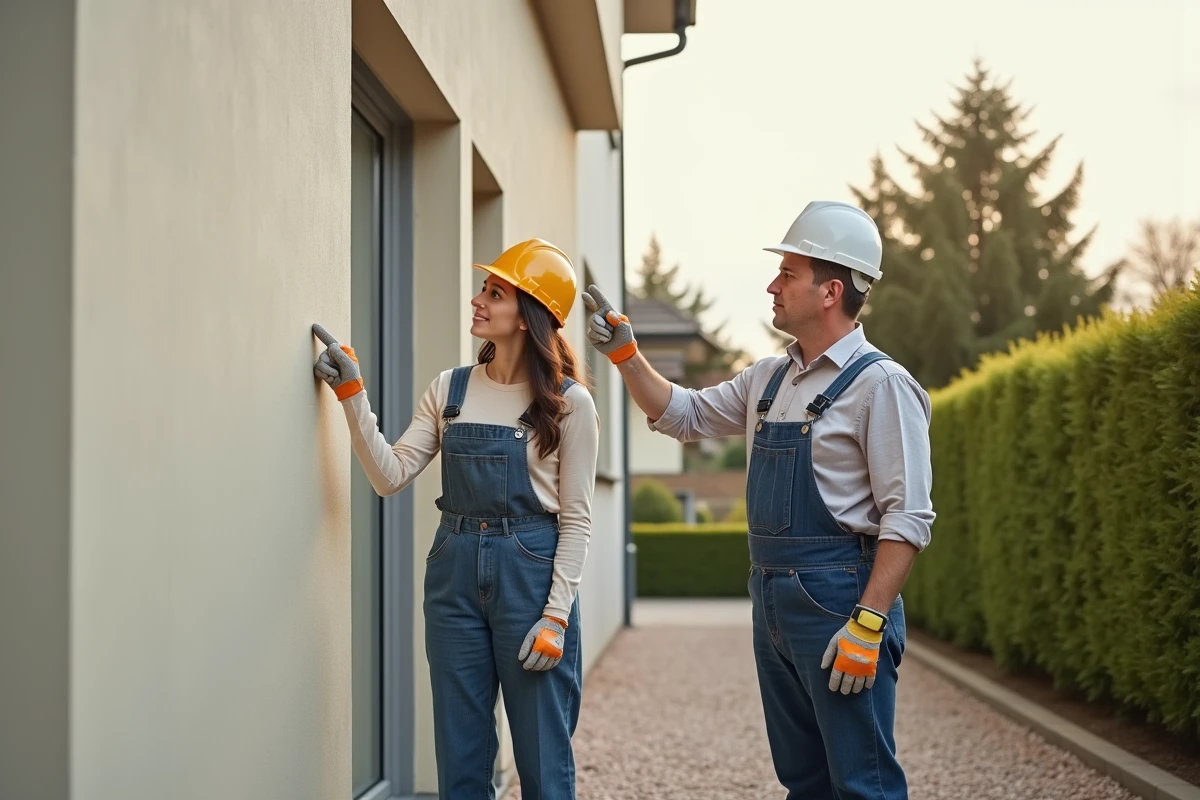
No theoretical timeframe replaces a physical test on the wall. The most reliable method is to run a fingernail or a nail over a less visible area of the facade. Three scenarios arise:
- The coating scratches cleanly, leaving a clear groove without material tearing: scraping can begin
- The nail sinks, and the material deforms or sticks: the coating is still too fresh; wait
- The nail slides without leaving a trace or produces fine dust: the coating is too dry for standard manual scraping
This test should be performed in several areas of the facade. Shaded areas, inward corners, and lower parts of the wall dry more slowly than surfaces exposed to sunlight or wind.
When the coating is already too dry
A coating that has become too hard to be scraped manually is not lost. Light misting with a sprayer, without soaking the surface, can restore a working window of a few hours. This touch-up technique works better on lime-based coatings than on cement formulations.
Conditions for successful scraping the next day
Rather than a binary answer, scraping the next day depends on a combination of factors that the practitioner must check before intervening:
- Ambient temperature maintained between 10 and 25 °C during the first 24 hours
- Relative humidity below 70%, without rain or fog
- Coating thickness regular and in accordance with the manufacturer’s recommendations
- Properly prepared substrate, neither too absorbent nor too smooth
- Absence of strong winds that could have caused premature surface crusting
Scraping the next day is possible on the majority of summer job sites in a temperate climate. For autumn, winter, or humid area job sites, delaying the intervention by an additional 24 to 48 hours remains the safest decision. The DTU 26.1 sets the regulatory minimum, but it is the nail test on the wall that gives the final green light.