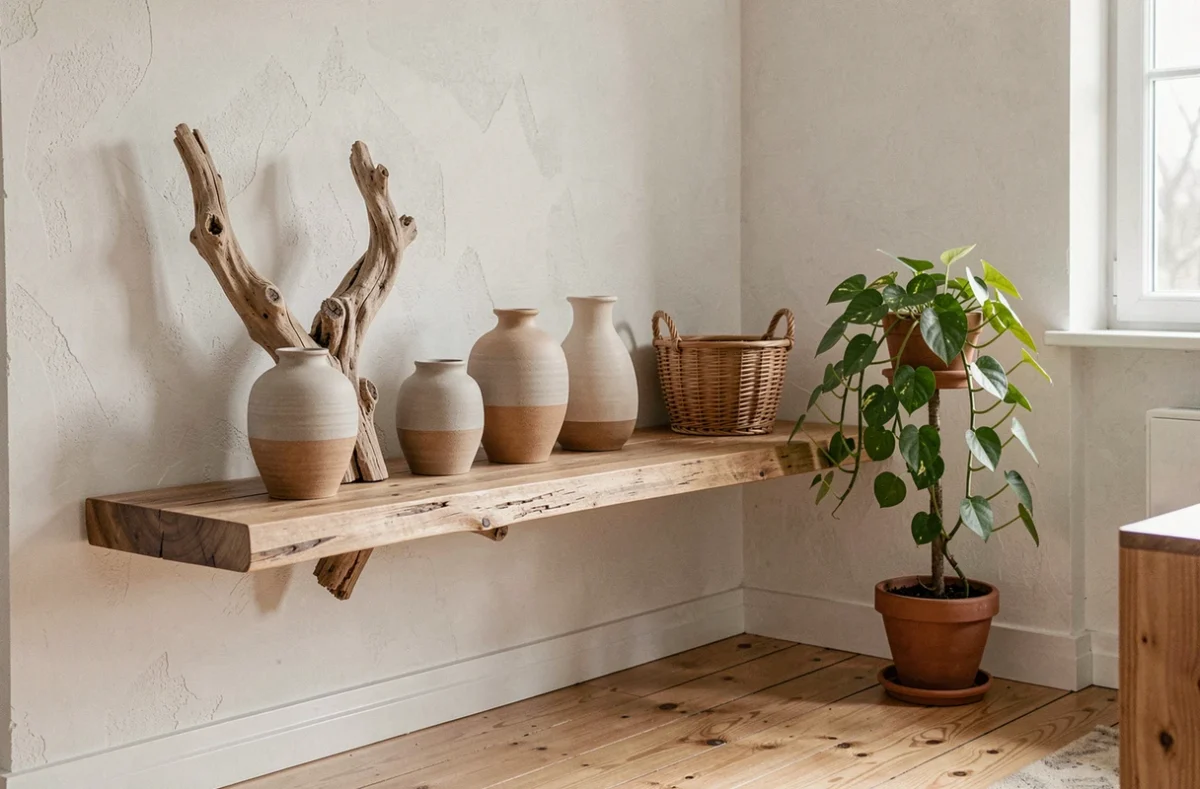
An original decorative object is not just an unusual shape placed on a shelf. It is an element that alters the perception of a space, through its material, scale, or the contrast it creates with existing furniture. Enhancing an interior with original objects requires understanding how these pieces interact with light, volumes, and the surfaces already in place.
Air Quality and Decorative Materials: A Criterion Before Aesthetics
Before choosing an object for its shape or color, its chemical composition deserves attention. In France, construction and decoration products intended for indoor use must display a VOC emission class ranging from A+ to C. Paints, varnishes, adhesives, and coatings contribute to emissions after installation.
This classification also applies to painted or varnished decorative objects. A wooden vase coated with a varnish rated C emits more volatile organic compounds than a raw model or one treated with natural oil. For closed spaces like a bathroom or a small living room, this difference affects the quality of the ambient air.
Another evolution to watch: the French law of February 27, 2025, plans to extend the ban on PFAS to upholstery textiles starting January 1, 2030. These substances, used for stain-resistant and water-repellent treatments on cushions, curtains, or sofa fabrics, are becoming a selection criterion. Prioritizing textiles without chemical treatment now anticipates a regulatory constraint while bringing more authentic materials to your interior.
To delve into trends and discover pieces that meet these criteria, you can check out the home section of Pop Shot, where several categories of objects are grouped by style and use.
Decorative Objects in Raw Materials: Wood, Glass, and Ceramics in a Living Room
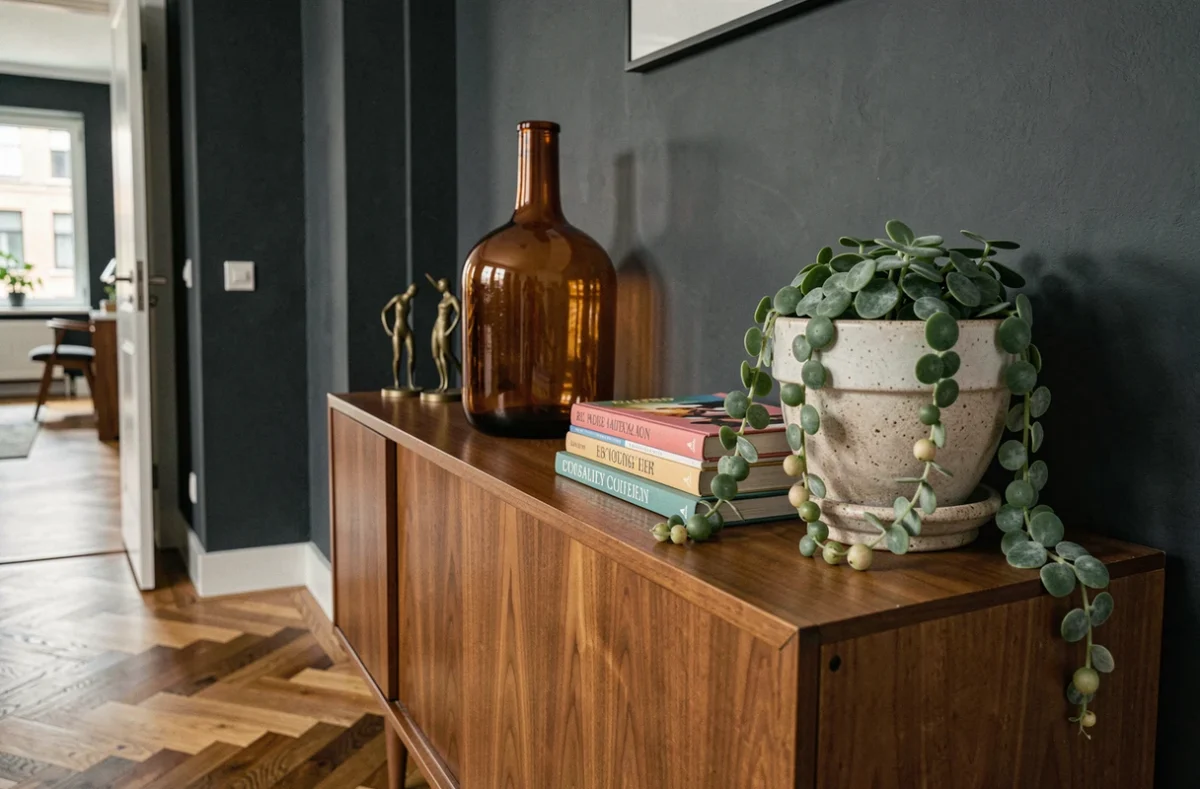
The choice of material determines the atmosphere of a room much more than the shape of the object. The same candle holder made of blown glass and glazed ceramic does not produce the same effect in a living room.
Raw or lightly oiled wood brings warmth without overloading the space. A walnut sculpture placed on a metal coffee table creates a dialogue between materials that draws the eye without additional decoration. Walnut, by the way, is among the most sought-after woods in strong pieces of current furniture.
Glass, on the other hand, plays with natural light. A colored glass object placed near a window casts reflections that change throughout the day. This interaction with natural lighting transforms a simple object into a living element of decoration.
Handcrafted ceramics offer a third dimension. Their surface irregularities and variations in hue after firing ensure that each piece remains unique. In a minimalist interior, a single handcrafted ceramic object is enough to break the monotony of an overly smooth ensemble.
Combining Materials Without Overloading
The temptation to multiply different materials often leads to a confusing result. A simple rule works: limit each visible space (shelf, console, coffee table) to a maximum of two complementary materials.
- Wood and metal: the warm/cool contrast structures a living area or an entryway without adding color
- Glass and ceramics: the transparency of the former highlights the texture of the latter, particularly effective on a dark piece of furniture
- Stone and raw textile: a polished pebble next to a linen cushion creates a mineral and soft ambiance suitable for a bedroom or relaxation area
Second-Hand Objects: Hunting for Original Pieces for Your Decor
Sales of new furniture are declining while second-hand purchases are on the rise. This trend goes beyond budget considerations: hunting allows you to find objects that are unavailable in stores, made in times when production runs were shorter and finishes were manual.
A brass tray from the 1970s, an Art Deco mirror, or an opaline vase are unique pieces that tell a story. Placed in a contemporary interior, these objects create a temporal contrast that adds character to any room.
However, reuse remains a minority practice in the sector. According to Ecomaison, only a small portion of household objects and materials processed in 2025 was directed towards reuse. Buying second-hand does not guarantee, by itself, a truly circular model. Checking the actual condition of the object, its provenance, and its durability remains necessary to avoid a purchase that will quickly end up in the landfill.
What to Check Before Buying a Second-Hand Decorative Object
- The absence of structural cracks on ceramics or glass, which weaken the object and make it dangerous in case of a fall
- The possible presence of lead paint on vintage objects, particularly frames, decorative toys, and small painted furniture made before the 1990s
- The stability of legs and attachments on objects placed at height (wall shelves, sconces, clocks)
Staging and Ambiance: Playing with the Scale of Objects
An original object produces its maximum effect when its scale surprises. An oversized vase placed on the floor in an entryway immediately draws the eye. Conversely, a miniature placed alone on a large shelf creates a deliberate void that gives the space breathing room.
The scale contrast works better than accumulation. Three similarly sized objects lined up on a console produce a static effect. A large object flanked by a small one, with an empty space between them, generates a visual rhythm that guides the gaze.
This logic also applies to walls. A single large frame has more impact than a gallery of small frames, especially in a living room or dining room where the main wall serves as a focal point. The ambiance of a room is built as much by subtraction as by addition.
Ultimately, interior decoration with original objects relies on precise choices rather than accumulation. A well-selected material, a carefully hunted object, a controlled scale: these three levers transform a mundane space into an interior that captures attention, without requiring an extravagant budget or heavy renovation.