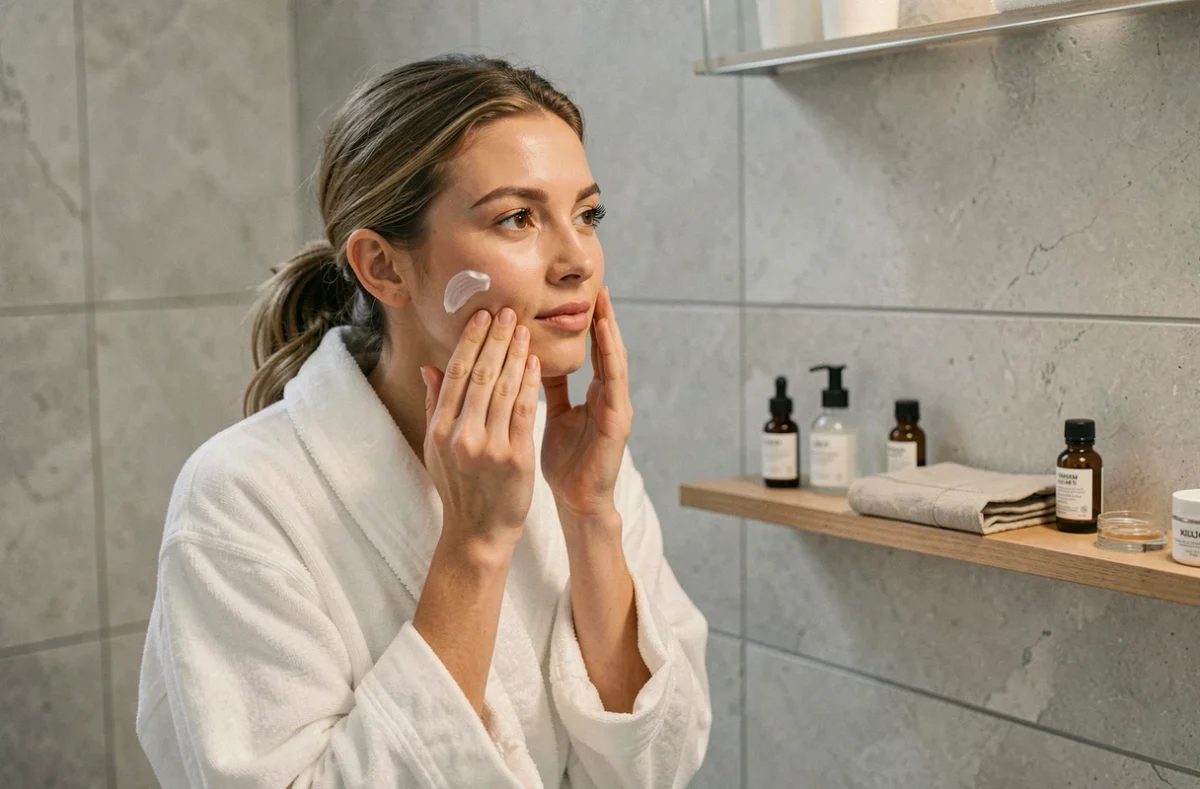
Taking care of your beauty and health every day doesn’t require a big budget or hours in front of the mirror. A few targeted steps, repeated consistently, are enough to protect your skin, preserve your energy and maintain overall balance. The key is choosing the right steps, adapting them to your body and knowing when at-home care has reached its limits.
Daily beauty routine: three steps that really make a difference to your skin
Have you noticed that your skin looks duller after a week without a regular routine? It’s not your imagination. Throughout the day, dead skin cells, sebum and pollution particles build up on your skin. Without proper cleansing, this buildup clogs pores and accelerates skin aging.
The first step to make part of your routine is gentle cleansing morning and night. In the morning, a mild cleanser removes the sebum produced overnight. In the evening, removing makeup and then cleansing gets rid of the residue that has built up during the day. Regular soap can be too harsh and damage the hydrolipidic film, the natural barrier that protects your skin from external aggressors.
The second step is moisturizing. Apply a moisturizer suited to your skin type (oily, dry or combination) to clean, slightly damp skin so its active ingredients can absorb more effectively. Moisturizing isn’t just for dry skin: dehydrated oily skin produces even more sebum to compensate.
The third step is often overlooked: sun protection. UV rays pass through clouds and windows. Applying sunscreen every morning, even in winter, helps prevent dark spots and premature aging. To learn more about suitable skincare, visit this useful resource: https://soins-beaute-sante.fr.

Health and well-being: habits that support beauty from within
The condition of your skin, hair and nails depends largely on what’s happening inside your body. No serum can make up for chronic sleep deprivation or an unbalanced diet.
Sleep and recovery
During sleep, the body begins a cycle of cellular repair. Collagen production increases and tissues regenerate. Regularly getting fewer than six hours of sleep a night can show: pronounced dark circles, a dull complexion and skin that heals more slowly.
A regular bedtime routine matters just as much as a facial treatment. Turning off screens an hour before bed, keeping the bedroom cool and going to bed at a consistent time all promote better-quality sleep.
Nutrition and hydration
Drinking enough water supports skin elasticity and helps the body eliminate toxins. When it comes to food, a few simple guidelines can make a difference:
- Colorful fruits and vegetables (carrots, blueberries, bell peppers) provide antioxidants that slow cellular oxidative stress
- Fatty acids found in oily fish, nuts and olive oil strengthen the skin barrier and help reduce inflammation
- Protein (meat, legumes, eggs) provides the amino acids needed to produce collagen and keratin
These food choices don’t mean following a strict diet. The goal is to vary your sources of nutrients throughout the week rather than searching for a miracle food.
Adapt your skincare routine to your body and the season
Using the same products all year round is like wearing a coat in summer. Your skin responds to changes in temperature, humidity and sun exposure. In winter, it needs richer textures and protection from the cold. In summer, lightweight formulas and stronger sun protection are essential.
Your skin type can also change with age, hormonal fluctuations or certain medications. Reviewing your routine twice a year helps ensure that your products still meet your skin’s needs.
Why make these regular adjustments? Because a product that worked at 25 may irritate your skin at 40. Combination skin can become dry after menopause. And continuing to use an acne treatment out of habit when your skin no longer needs it can dry it out unnecessarily.

When a beauty routine can’t replace medical advice
Taking care of yourself every day is worthwhile, but it has clear limits. Certain changes in your skin or body call for a professional diagnosis, not a different moisturizer.
- A mole that changes shape, color or size warrants a prompt dermatology appointment
- Sudden or prolonged hair loss may indicate a hormonal imbalance or iron deficiency
- Persistent facial redness, often mistaken for sensitivity, may be rosacea that requires medical treatment
- Chronic fatigue that doesn’t improve with sleep or diet warrants blood tests
A cosmetic product works on the surface; a doctor identifies the cause. This distinction is fundamental. Self-care and medical follow-up aren’t mutually exclusive: they complement each other. A well-planned beauty routine can help you spot abnormalities sooner, precisely because you observe your skin closely every day.
The best health habit in any skincare routine is staying alert. Check your skin, hair and energy levels regularly, and seek advice if a change persists for more than two weeks: it’s a simple preventive step that costs nothing and offers lasting protection.