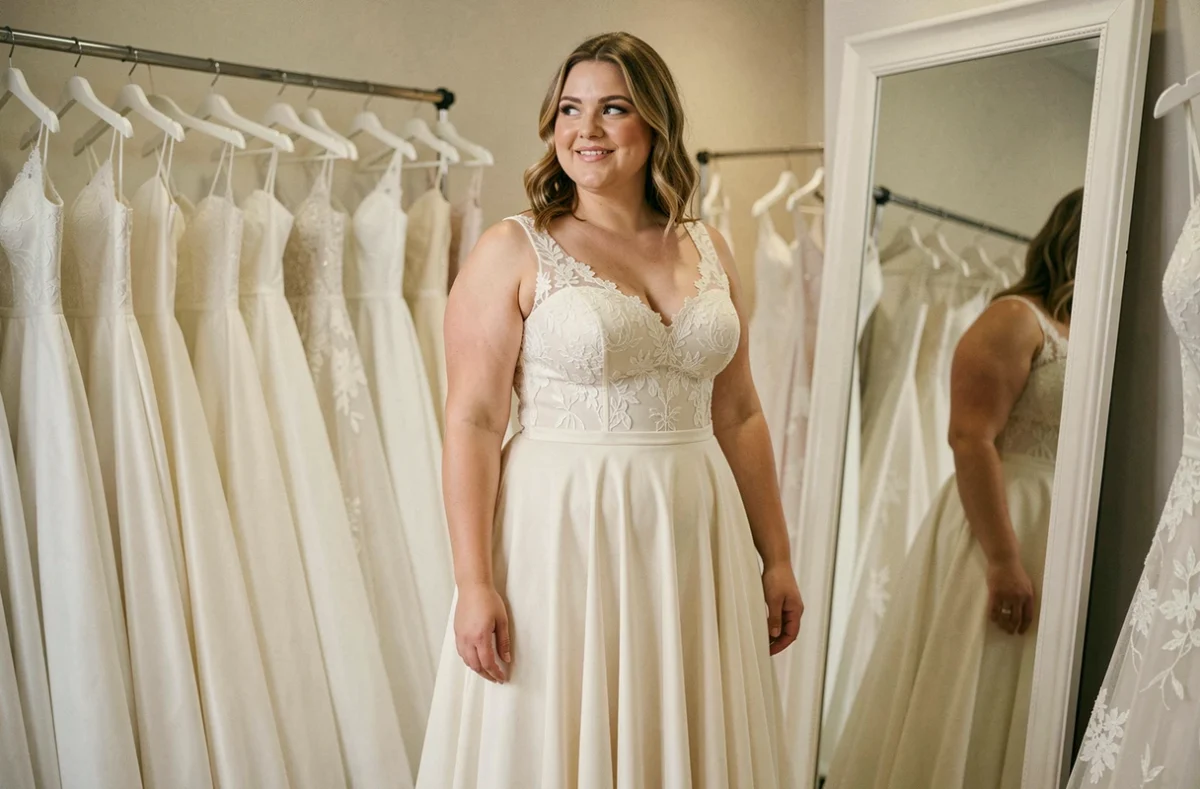
The bridal market now offers plus-size wedding dresses in a much wider range of styles than it did ten years ago. Some brands feature collections ranging from size 34 to 50 and beyond, with customizable designs. This broader selection does not automatically make choosing a dress easier: between how a style looks in photos, what is actually available in-store, and the alterations it may need, there are several factors to consider before booking an appointment.
In-store samples: the first thing to check before choosing a style
Most guides focus on flattering silhouettes. But before you get to that, one practical consideration can shape the entire try-on experience: the availability of samples in your size.
A dress may be listed in a wide range of sizes without a try-on sample being available in-store above size 42 or 44. Trying on a sample that is too small and pinned at the back does not give you a true sense of how the fabric will drape or how comfortable the fit will be.
Before booking an appointment, ask three specific questions: how many styles are available to try on in your size, are there any extra fees to order a suitable sample, and how long will it take if the sample needs to be shipped in? The answers will quickly help you distinguish boutiques with a genuine plus-size selection from those that advertise one without actually stocking it.
Some brides-to-be also choose plus-size dresses for weddings from specialist online retailers, which can broaden the selection when local boutiques have few samples.
Body shape and wedding dress styles: what really changes your silhouette
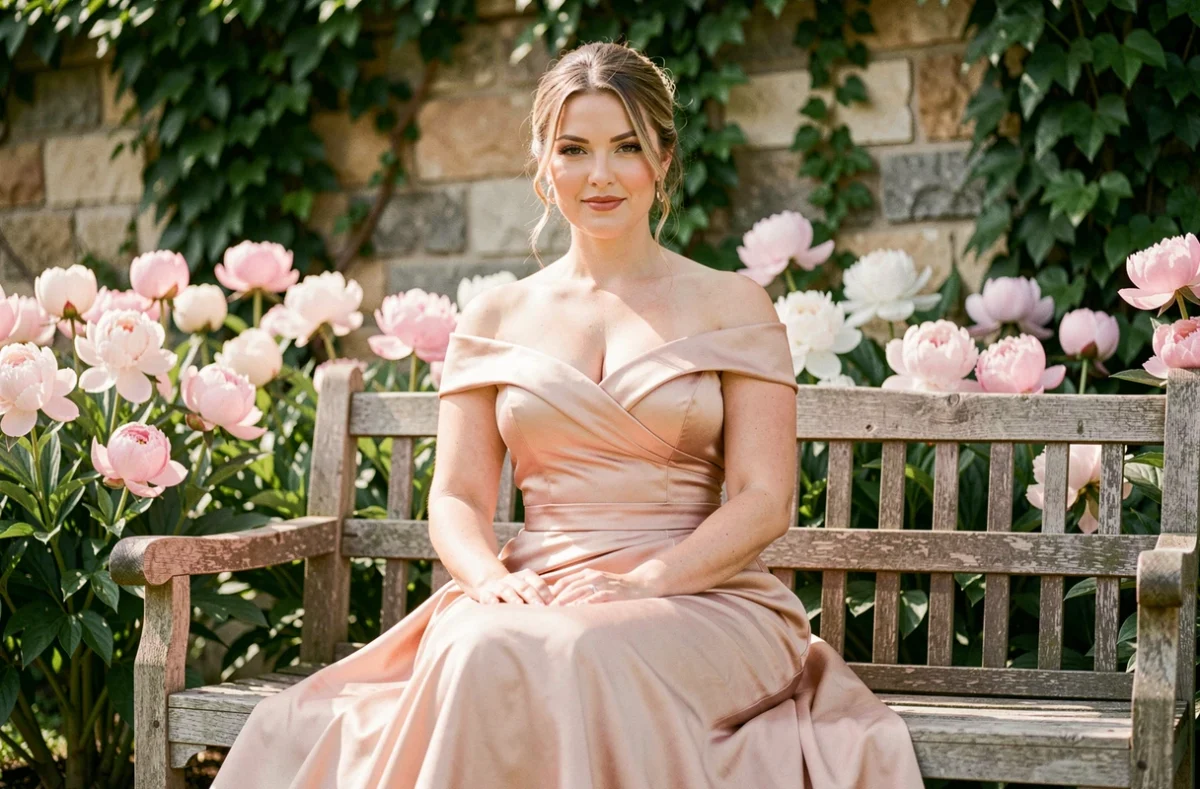
Knowing your body shape does not mean squeezing yourself into a rigid category. The goal is to identify the areas you want to highlight and those where you would prefer a more fluid fit.
A-shaped silhouette: shoulders narrower than the hips
This is a common body shape among curvy women. Styles that draw attention to the upper body work well: a detailed neckline, lace sleeves, or a structured bodice can visually balance your proportions.
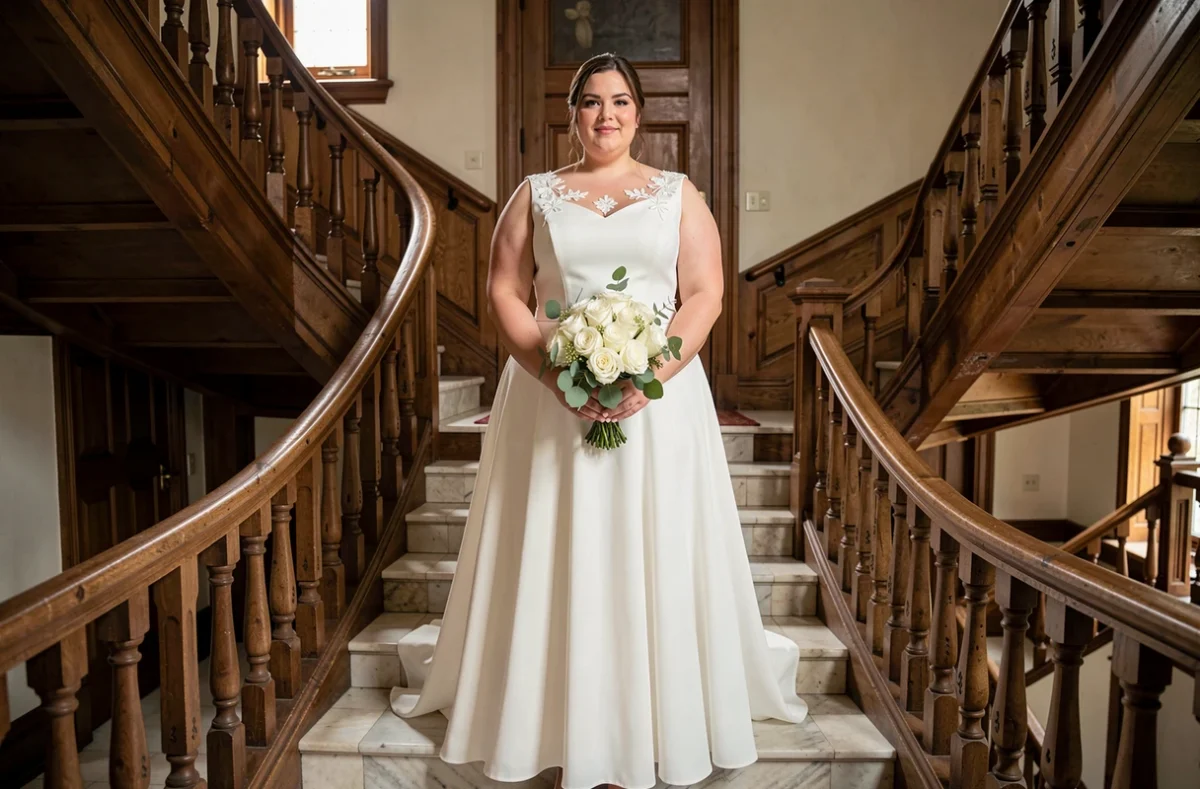
A skirt that flares from the waist skims the hips without squeezing them. An A-line cut, which gradually widens, creates this effect without the volume of a ball gown skirt.
O-shaped silhouette: fullness concentrated around the stomach
Empire-waist styles, with the waistline just below the bust, leave the stomach area completely unrestricted. The fabric falls straight from the bodice, creating a longer-looking silhouette.
A V-shaped neckline enhances this lengthening effect. A slightly fitted bodice paired with a flowing skirt defines the upper body while allowing the lower half to move freely.
X-shaped silhouette: defined waist, bust and hips in alignment
This body shape suits most styles, including mermaid dresses, provided the fabric contains enough elastane to move with you. Test how comfortable the dress is to walk and sit in during your fitting—not just how it looks when you stand in front of the mirror.
Fabrics and construction: chiffon, lace and technical linings
Fabric choice has just as much impact on the final look as the cut. Two dresses in the same style can look radically different depending on the material.
- Chiffon is a great choice for plus-size silhouettes: it is lightweight and fluid, does not cling, and creates movement. It works particularly well layered over a matte lining.
- Lace adds texture without bulk. Layered over tulle or crepe, it dresses up the bodice and arms without weighing down the silhouette. Choose a medium-scale lace pattern: very small motifs can get lost, while very large ones draw attention to a specific area.
- Soft, structured matte crepe works well for straight or slightly flared dresses. It does not show underwear lines and holds its shape throughout the day.
- Shiny satin and stiff taffeta, on the other hand, tend to crease and catch the light where the fabric is under tension. Matte fabrics are more forgiving than shiny ones.
The lining plays a frequently overlooked role. A good jersey or microfiber lining makes the dress easier to put on, stops the outer fabric from sticking to your skin, and helps it keep its drape even after several hours.
Made-to-measure or alterations: two different ways to get a wedding dress to fit
These two options are often confused, even though they meet different needs. Made-to-measure starts with your exact measurements to create a unique pattern. Alterations adapt an existing dress made from a standardized pattern.
For a plus-size silhouette, the difference is significant. A standard-size dress that is altered can lose its original proportions if the changes span more than two sizes. Darts, side seams, and the placement of panels cannot always be repositioned without affecting the design’s visual balance.
Ask to see examples on people with a similar body shape to yours. A studio specializing in made-to-measure bridalwear may be able to show photos of clients wearing their finished dresses, with their permission. This is a much more reliable indicator than a sketch or a photo of a model.
Also clarify how many fittings are included and what the lead times are. For significant alterations, plan on at least three fittings spread over several weeks. A second-hand or clearance dress may shorten the overall timeline, but check its actual condition, measured size (not just the label), and alteration options before committing.
Necklines, sleeves and accessories: details that draw the eye
A V-neckline lengthens the neck and torso. A sweetheart neckline highlights the bust while providing good support when the bodice is boned. A boat neckline visually broadens the shoulders, making it a good choice for A-shaped silhouettes.
Long lace or tulle sleeves cover the arms without adding bulk. Three-quarter sleeves offer a balance of coverage and lightness. Wide straps provide better bust support than a strapless bodice, which needs reinforced boning to stay in place all day.
As for accessories, a slim belt placed at your natural waist—the narrowest point of your torso—defines your silhouette without cutting across it. Avoid wide belts, which create a block of visual weight across the middle of your body. A simple, long veil elongates your silhouette from behind, while drop earrings extend the line of your neck downward.
Ultimately, choosing a plus-size wedding dress comes down to three practical checks: trying on a sample in your actual size, choosing a fabric that will keep you comfortable throughout the day, and having the dress fitted by a professional who understands the needs of bodies outside the standard size range.