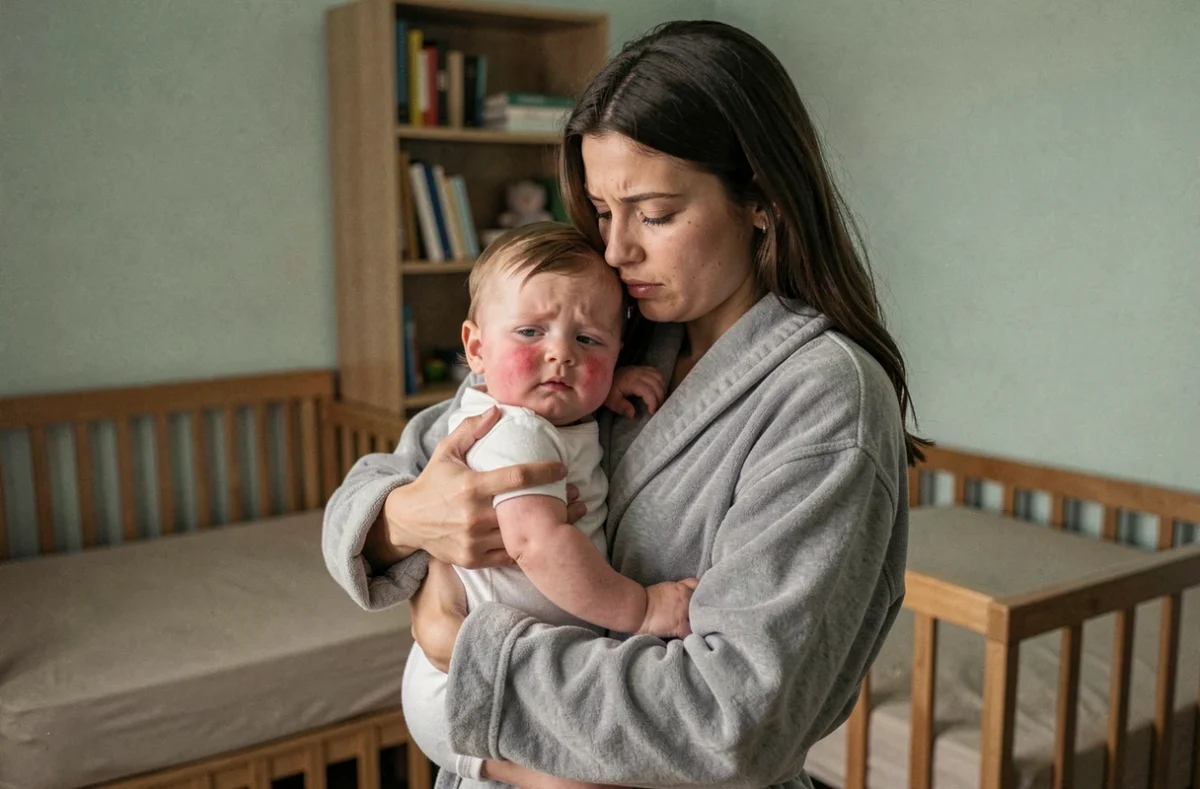
Your 14-month-old baby was sleeping quite well, and for the past few days, the nights have turned into a battlefield. Waking up screaming, refusing to go back to bed, inconsolable crying for an hour or more. This sudden shift is destabilizing, but it can be explained by specific mechanisms related to the child’s development at this age.
Night terrors or nightmares at 14 months: two very different awakenings
A baby who wakes up screaming, throws themselves back, and refuses any contact is not necessarily throwing a tantrum. They may be experiencing a night terror, a phenomenon distinct from nightmares and often unknown to parents.
During a night terror, the child screams, appears panicked, but is not actually awake. Trying to console them can sometimes worsen the situation. The natural reflex (picking them up, talking, turning on the light) can prolong the episode because it disrupts an ongoing deep sleep cycle.
A nightmare, on the other hand, occurs during REM sleep, later in the night. The child truly wakes up, recognizes their parents, and accepts comfort. The distinction radically changes the response to adopt: in the face of a terror, stay nearby without intervening; in the face of a nightmare, reassure calmly.
As detailed by several specialized resources, including the parental universe on Maman du Net, these episodes are common around 14 months and do not indicate a lasting problem.
Why sleep regresses at 14 months
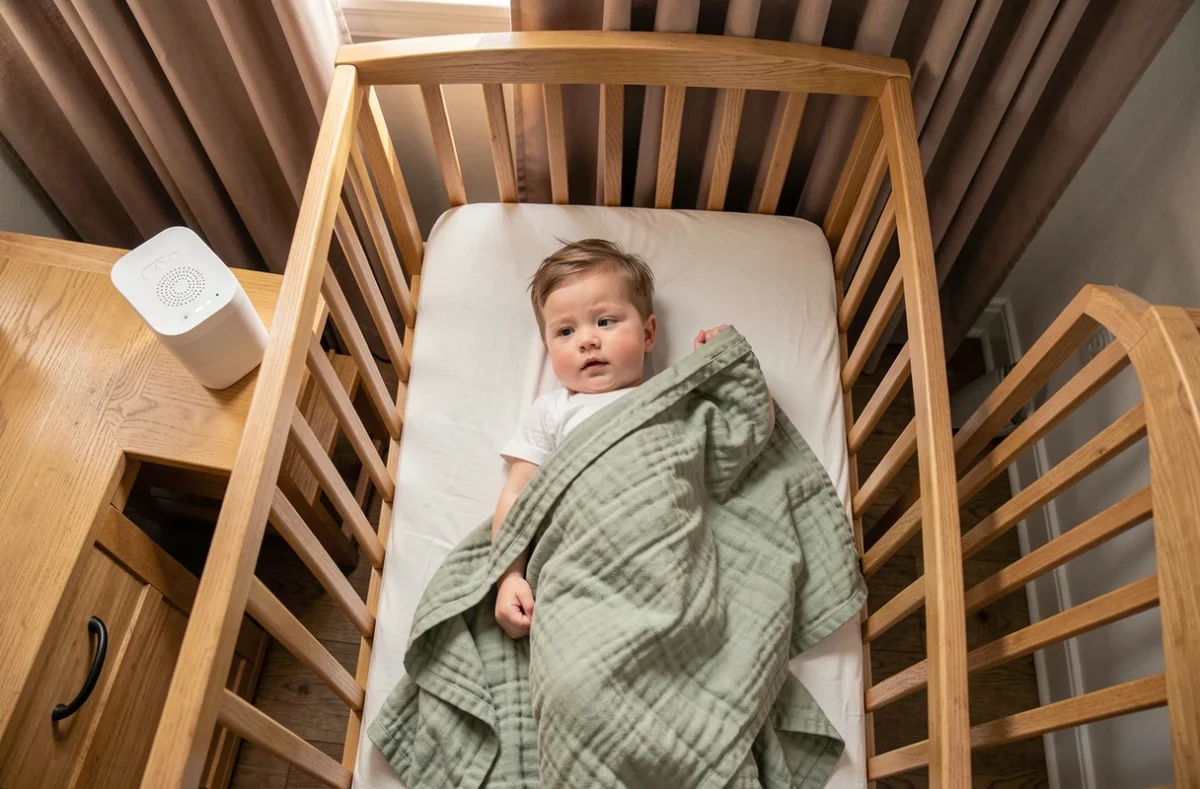
You may have noticed that your child, who was sleeping through the night, suddenly starts waking up several times? This apparent regression is not a mere coincidence.
At this age, the brain undergoes a phase of intense maturation. The child learns to walk, begins to associate words with objects, and develops a clearer awareness of separation. Each motor or cognitive acquisition can temporarily disrupt sleep.
Separation anxiety, already present around eight or nine months, often peaks around 14 months. The child understands better that their parents exist even when they cannot see them, which, paradoxically, makes their absence harder to tolerate at night.
Another concrete factor: the transition from two naps to one. This change does not happen overnight. For several weeks, the child may alternate between days with one nap (where they are exhausted in the evening) and days with two naps (where they fall asleep too late). Forcing this transition before the child is ready disrupts their nights.
The reliable benchmark remains total sleep over 24 hours. Public Health France places the needs between 11 and 14 hours for children aged 1 to 2 years, including naps. A night of nine hours complemented by two good naps is not a disorder.
Bedtime ritual at 14 months: what works beyond classic advice
Bath, pajamas, story, sleep. This pattern is widespread, and for good reason, it sets a framework. But at 14 months, the ritual must also incorporate a dimension that guides often overlook: the transition time between activity and rest.
A child who plays intensely and then finds themselves in bed two minutes later has not received the necessary neurological signal to initiate falling asleep. The body needs to lower its internal temperature, heart rate, and level of alertness.
Some concrete adjustments can change the game:
- Reduce the brightness of the living space at least twenty minutes before bedtime, not just in the bedroom. Bright light blocks the natural production of melatonin, even in a toddler.
- Offer a calm but engaging activity (a touch-and-feel book, a slow stacking game) rather than a screen or a physical game. The goal is to occupy the mind without stimulating it.
- Maintain the same order every evening, including on weekends. The child’s brain associates the sequence of actions with the sleep signal, not the time on the clock.
- Avoid extending the ritual with each protest. Adding a book, then a song, then an extra cuddle inadvertently teaches that resisting delays bedtime.

Repeated night awakenings: when to consult a pediatrician
Not all night awakenings fall under normal development. Some signals warrant prompt medical advice.
A child who snores regularly or breathes through their mouth while sleeping may have an obstruction of the airways, sometimes related to enlarged adenoids or tonsils. This is not trivial: the quality of sleep is compromised even if the child seems to be sleeping enough hours.
Systematic awakenings accompanied by scratching or leg agitation may also point to a physical cause (skin discomfort, residual reflux). The trap would be to attribute everything to teething. Teething does cause discomfort, but it does not last for weeks.
The key criterion is the impact during the day. A child who sleeps less but remains curious, active, and in a good mood probably does not have a disorder. A chronically irritable child who refuses to eat or regresses in their acquisitions justifies a consultation.
Melatonin in babies: a risky shortcut
Faced with exhaustion, some parents consider over-the-counter melatonin. At 14 months, this option should be ruled out. The European consensus of pediatricians advises against melatonin before age 2, due to insufficient safety data on infants.
In older children, it is only considered as a last resort, after behavioral approaches have failed, and always under medical supervision. No over-the-counter supplement replaces a stable ritual and a suitable sleep environment.
Sleep disorders at 14 months have a reassuring characteristic: they pass. Most children regain a stable rhythm within a few weeks, provided that the established benchmarks remain consistent. The real lever is not a miracle solution; it is regularity.