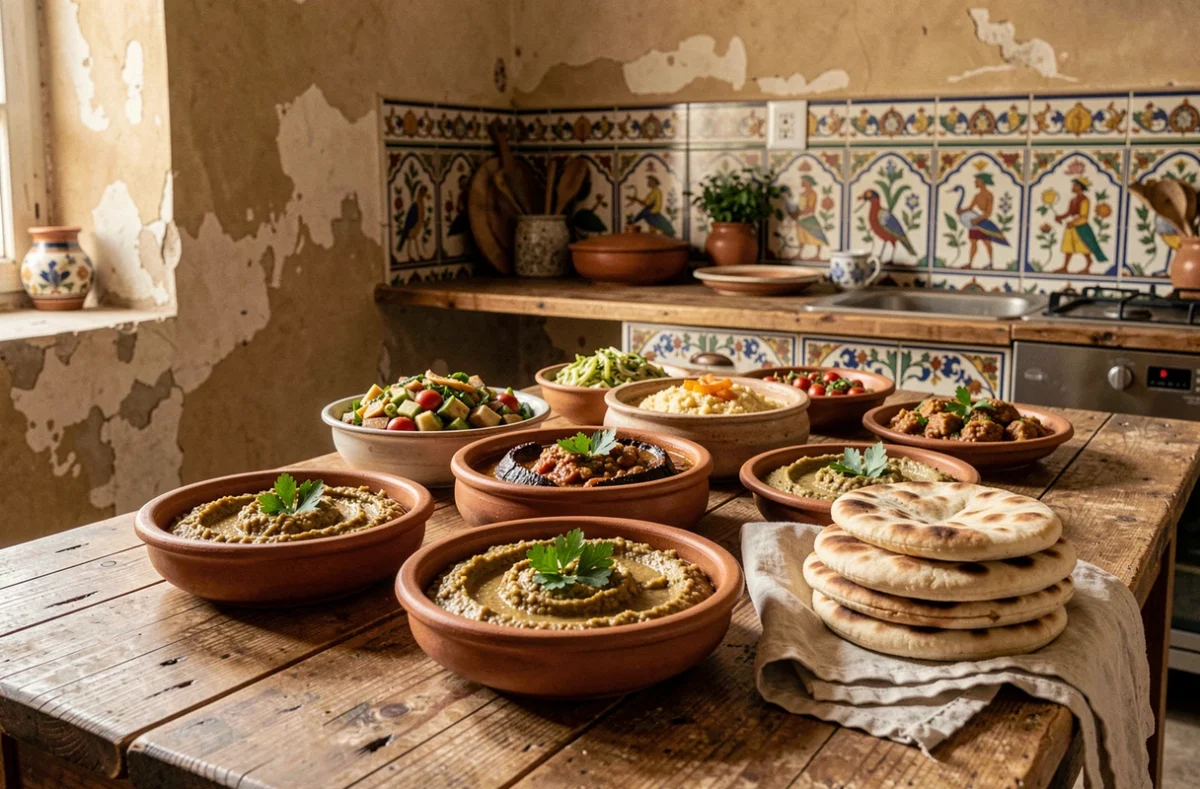
Egyptian cuisine did not adapt to vegetarianism; it preceded it. Dishes like foul medames, koshari, or ta’ameya are consumed daily by all social classes, long before the notion of a “vegetarian recipe” became a distinct culinary category. This historical depth distinguishes the Egyptian repertoire from most Mediterranean cuisines, where meatless dishes often remain secondary variations.
The Coptic fast, which excludes meat, dairy products, and eggs during several periods of the calendar, has contributed to embedding a wide range of preparations based on legumes, vegetables, and vegetable oil into the country’s dietary habits.
Fava beans, chickpeas, and lentils: the protein foundation of the Egyptian table
Legumes are not a side dish in Egypt. They form the backbone of the meal, from breakfast to dinner. Foul medames, made from slowly cooked fava beans that are then mashed with oil, lemon, and cumin, is probably the most consumed dish in the country. Its simplicity masks a real nutritional richness, and each household has its own variant.
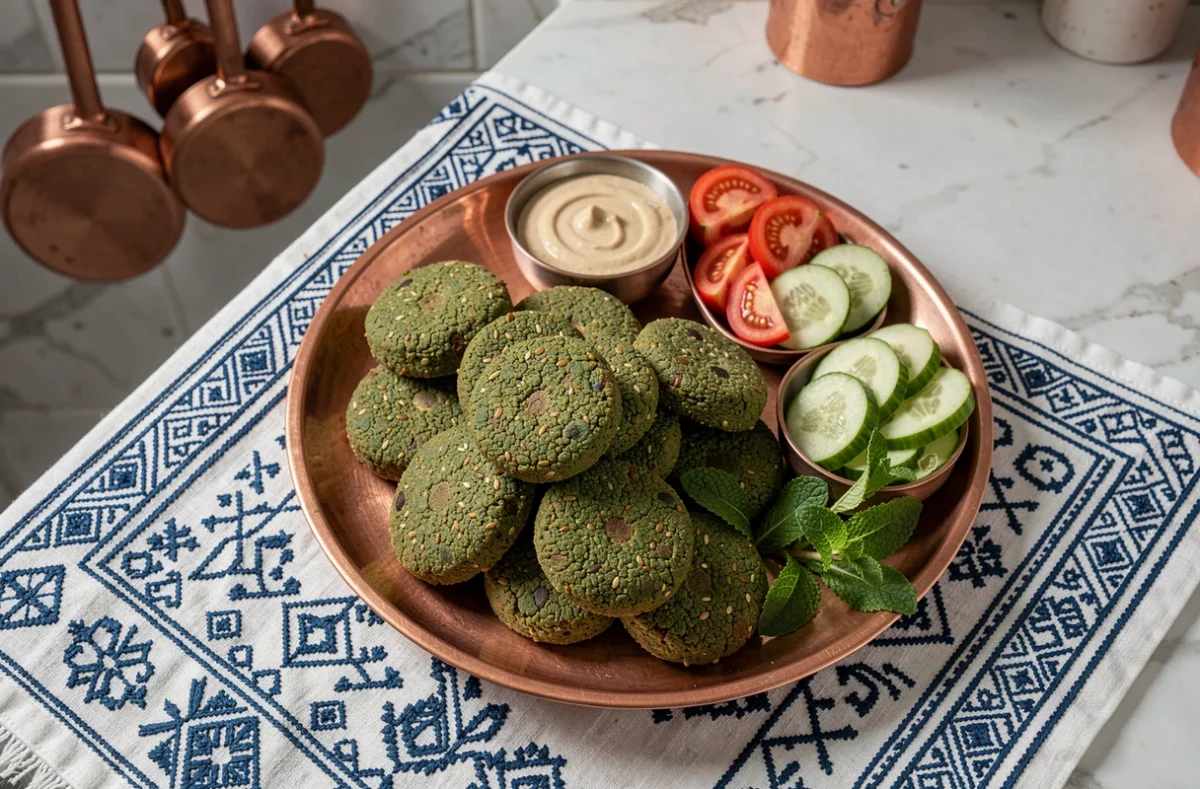
Ta’ameya deserves special attention. Often confused with Levantine falafel, Egyptian ta’ameya is made from dried fava beans rather than chickpeas. This difference produces a softer texture inside and a thinner crust. It is fried in vegetable oil and served in baladi bread with pickles and tahini. Several detailed recipes are available on the Monde Gourmandises blog, which lists these preparations along with their regional variants.
Lentils also hold an equally central place. Shorbet ads (red lentil soup with cumin) is a starter served in nearly all Egyptian restaurants. Its preparation takes no more than twenty minutes, and the result is a fragrant velouté that stands on its own with a drizzle of lemon.
Koshari: anatomy of the national vegetarian dish
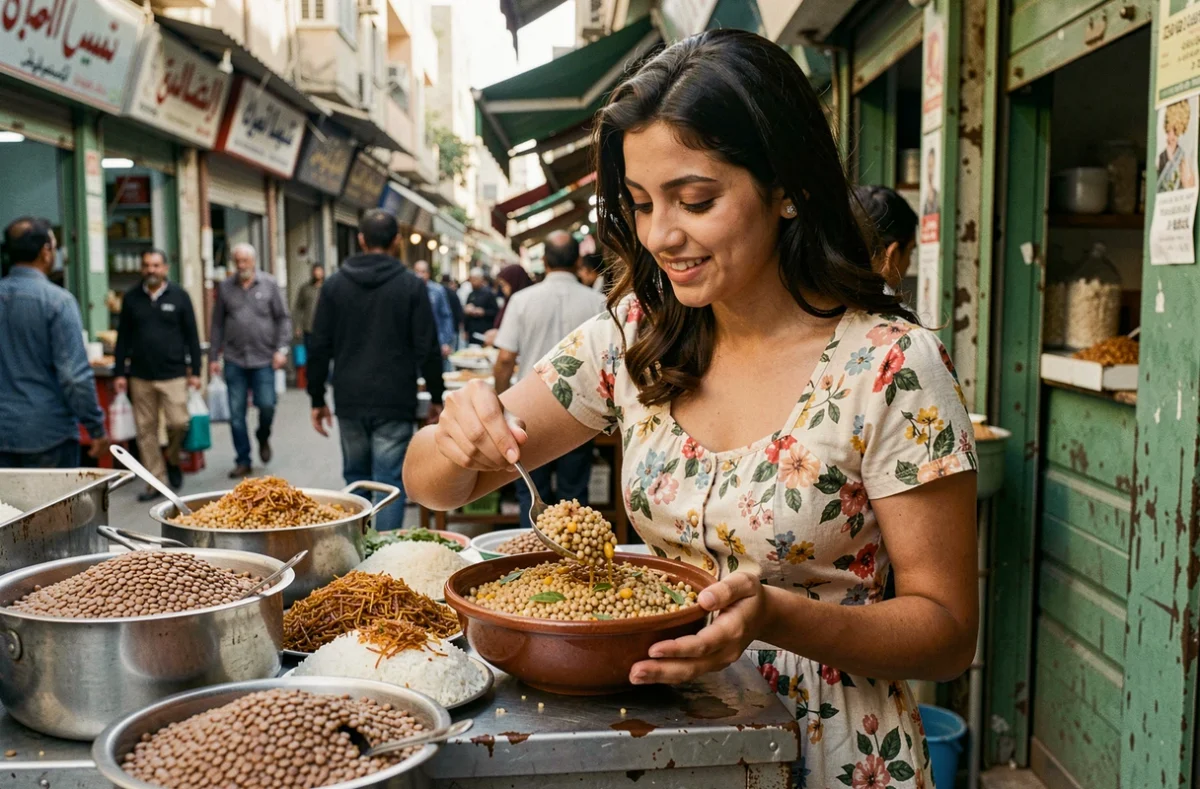
Koshari occupies a special place in Egyptian gastronomy. This dish layers rice, lentils, short pasta, and chickpeas, all topped with a spicy tomato sauce with vinegar and crispy fried onions. It can be found in specialized stalls, called kosharis, where it is served in generously sized bowls.
Its layered construction is not an aesthetic accident. Each component brings a different texture: the softness of the rice, the crunch of the onions, the acidity of the sauce, the density of the lentils. Together, they form a complete protein profile thanks to the complementarity of grains and legumes.
The sauce of koshari, called daqqa, is based on concentrated tomato, garlic, vinegar, and chili. It is what gives the dish its distinctive character. Preparing the daqqa separately and serving it on the side allows everyone to adjust the level of spiciness.
Vegetarian Egyptian recipes based on vegetables and leaves
Molokhia without meat broth
Molokhia is a thick soup made from finely chopped jute leaves. In its traditional version, it relies on a chicken broth that must be replaced with vegetable broth to achieve a vegetarian result. The final seasoning, taqliya (garlic fried in oil with dried coriander), remains the same and gives the soup its characteristic aroma.
Field reports vary on this point: some preparations labeled vegetarian in restaurants still use a poultry base. Checking the broth base remains a useful precaution.
Baba ghanoush and grilled vegetables
Egyptian baba ghanoush is based on eggplants grilled directly over the flame, giving them a pronounced smoky flavor. Mixed with tahini, lemon, and garlic, they become a creamy mezze served with bread. This flame-cooking technique, shared with other Levantine cuisines, takes on a particular dimension in Egypt with the frequent addition of grilled green peppers.
Common pitfalls to check: ghee, broth, and hidden cooking
An Egyptian dish that appears vegetarian may contain animal-derived ingredients without it being mentioned. Ghee (clarified butter) is used as a finishing touch in several preparations of rice, lentils, or vegetables. Replacing ghee with vegetable oil is the only necessary adaptation to make these dishes compatible with a strict vegan diet.
Here are the most common points of vigilance:
- Rice with vermicelli (roz bil sha’riyya) is often cooked in butter or ghee, which can be replaced with sunflower oil without altering the taste.
- Molokhia, as mentioned, may rely on an animal broth even when presented as vegetarian.
- Some Egyptian pickles (torshi) ferment in conditions that pose no problem, but industrial versions may contain animal-derived additives.
- Baladi bread is naturally vegan (flour, water, leaven), making it a reliable accompaniment for all dishes.
Three lesser-known Egyptian vegetarian mezze
Beyond the classics, several preparations deserve to be highlighted. Bessara, a puree of green fava beans flavored with coriander and cumin, is a mezze from the Nile Delta rarely offered outside of Egypt. Served warm with a drizzle of oil and raw onions, it provides an interesting contrast to foul medames with its vegetal freshness.
Dou’a (a mixture of dry spices based on sesame, coriander, cumin, and salt) accompanies bread dipped in oil. This simple condiment transforms a piece of bread into a complete aromatic bite.
The baladi salad (tomato, cucumber, onion, parsley, lemon, oil) accompanies every meal and provides the necessary freshness to balance denser legume dishes. Its unchanging composition hides a requirement: ripe vegetables and fresh lemon juice make all the difference.
The richness of the Egyptian vegetarian repertoire lies in its grounding in daily life rather than in an exclusionary approach. These recipes were not designed to replace meat. They exist independently, with their own logic of flavors, textures, and complementary plant proteins.