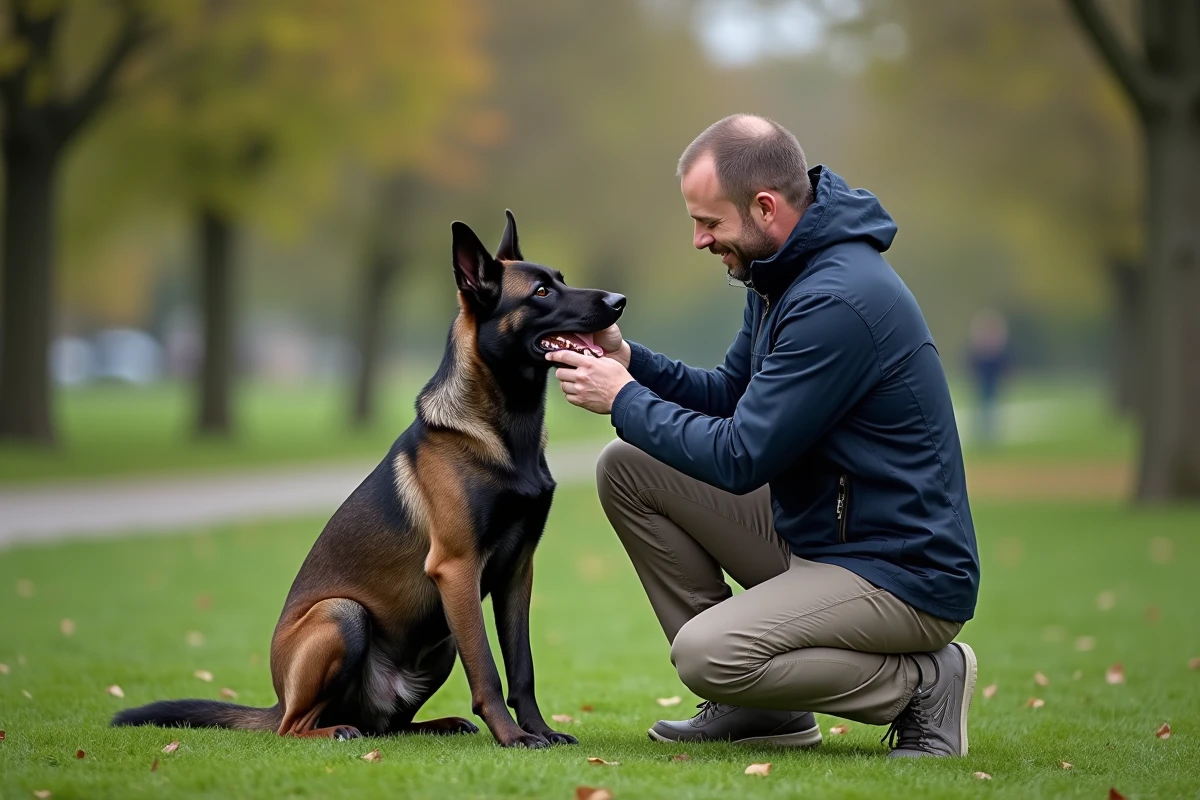
150 kg/cm² or 250? Depending on the source, the bite force of the Malinois takes on legendary proportions, oscillating without ever settling on an indisputable truth. Behind these circulating figures, the scientific reality remains nuanced: context, the dog’s motivation, and its stress level come into play. No serious study places a domestic breed above the wolf in terms of jaw strength. Veterinarians remind us: the bite of the Malinois, like that of any dog, primarily depends on the moment, the individual, and the environment. Situations where aggression truly manifests are rare outside of moments of intense fear, discomfort, or defense. Strength alone does not equate to risk; it all comes down to education, living conditions, and the animal’s unique personality.
Malinois bite force: what scientific studies really say
The fascination surrounding the Malinois’s jaw does not wane. Debates heat up, estimates abound. But what do verified measurements really tell us? Specialized publications place the bite pressure of the Malinois at around 195 PSI (pounds per square inch), which is about 120 PSI for a human. This figure puts the Malinois far behind the champions across all categories: the Kangal (743 PSI), the Bandog (730 PSI), the Cane Corso (700 PSI).
Originating from Malines, the Malinois, a variety of the Belgian shepherd, possesses considerable strength but does not top the rankings. For comparison, the German shepherd reaches 238 PSI, the Rottweiler 328, and the mastiff 552. This perspective challenges the reputation of the Malinois as a “formidable” dog in this regard. The scientific hierarchy is clear: the jaw of the Malinois is nothing exceptional compared to other breeds better equipped for crushing.
What emerges from the research on the subject? Researchers emphasize: bite strength is not a reliable indicator of danger. It is not the breed, but the situation, the education received, the experiences, and the emotional state that dictate the bite. Veterinarians urge not to confuse physical capabilities with behaviors. A dog, regardless of its jaw, does not bite “harder” simply because it belongs to a certain category.
Those who wish to delve deeper into the functioning of the canine jaw and its implications for owners can consult the following resource: the bite force of the Malinois. This content dispels myths and provides a realistic view of the potential of this working dog.
Is the Malinois more dangerous than other dogs? Untangling misconceptions
The Malinois carries a reputation as solid as its build. Lively, enduring, and docile when well-guided, it attracts both praise and fear. The image of a dog “ready to bite” clings to it, but the reality is less caricatured. Research is categorical: no direct link between breed and aggression has been established. What matters are the dog’s experiences, the quality of its education, and the stability of its living environment.
For those who want numbers, the ANSES lists the breeds most often reported for bites: first, the German shepherd (10% of incidents), followed by the Labrador (9%) and the Jack Russell (6%). The Malinois, despite becoming increasingly common in France, does not stand out in the statistics. Most accidents occur with family dogs, in ordinary situations, sometimes even in front of relatives, including children. The question, therefore, is not one of breed, but of interaction and mutual understanding.
Above all, aggression arises when a dog suffers from a lack of socialization, an absence of stable references, or when its needs are ignored. Fear, pain, annoyance, protective instinct: these triggers are universal. A well-supported, balanced, and active Malinois integrates easily into a dynamic household. Regulations govern certain breeds, sometimes requiring muzzles and leashes in public spaces. But the best prevention remains the owner’s commitment and understanding of the nature of the dog. This is where everything is at stake: in the relationship, understanding, and daily responsibility.
Ultimately, the bite force of the Malinois, so often brandished as a scarecrow, tells only part of the story. The rest is written by humans, every day, with their dogs.